Key Takeaways
Wood Railing
- Safety Rating: Good
- Maintenance: High
- Cost Range: $
- Best For: Traditional Aesthetics
Metal Railing
- Safety Rating: Excellent
- Maintenance: Low
- Cost Range: $$
- Best For: Strength & Durability
Composite Railing
- Safety Rating: Very Good
- Maintenance: Very Low
- Cost Range: $$
- Best For: Low Maintenance
Glass Railing
- Safety Rating: Excellent
- Maintenance: Medium
- Cost Range: $$$
- Best For: Unobstructed Views
Cable Railing
- Safety Rating: Very Good
- Maintenance: Low
- Cost Range: $$$
- Best For: Modern Aesthetics
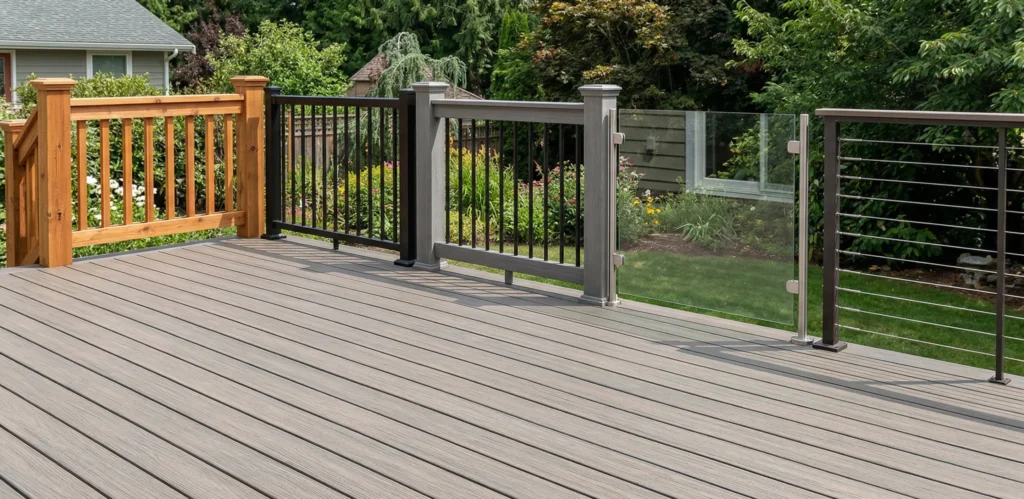
Introduction to Deck Railing Safety
Deck railings serve dual purposes as safety barriers and design elements, with material choice directly impacting structural integrity, maintenance requirements, and long-term performance. Building codes mandate specific height, spacing, and load requirements to prevent falls and injuries. Modern railing options include wood, metal, composite, glass, and cable systems, each offering distinct advantages for safety, aesthetics, and durability. Proper installation and regular inspection prevent the thousands of railing-related injuries that occur annually.
Deck railings represent far more than decorative finishing touches for your outdoor living space. They function as critical safety systems designed to prevent falls, provide support, and protect everyone who uses your deck. The Consumer Product Safety Commission reports that nearly 3,000 deck-related injuries occurred from 2016 to 2019, according to MAPFRE Insurance, with many incidents directly tied to railing failures.
Choosing the right railing system involves balancing safety requirements with aesthetic preferences, maintenance considerations, and budget constraints. Your decision affects not only the appearance of your deck but also its long-term structural integrity and the safety of everyone who uses it.
Modern railing technology offers unprecedented options for combining safety with style. From traditional wood systems to innovative glass and cable designs, today’s railing materials provide solutions for every architectural style and safety requirement. Understanding these options enables you to make informed decisions that enhance both the function and beauty of your outdoor space.
Build Your Dream Outdoor Space
Looking to transform your backyard with a custom deck? Discover design options, material insights, and expert tips in our comprehensive guide.
Custom Deck Design & Construction: Transform Your Outdoor Living Space
Building Codes and Safety Requirements
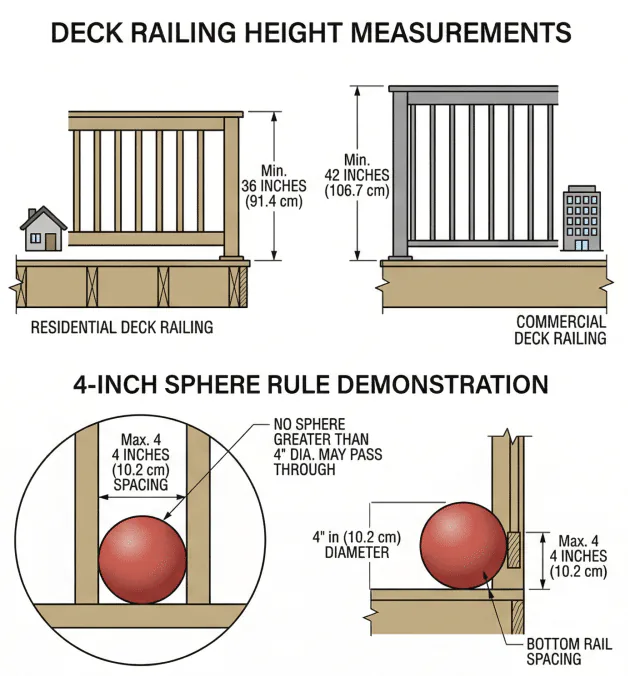
Deck railing safety codes establish minimum height requirements of 36 inches for residential decks and 42 inches for commercial applications, with guardrails designed to withstand 200-pound lateral forces in any direction. The 4-inch sphere rule prevents children from passing through openings, while stair railings follow a 6-inch sphere rule. Proper deflection limits and structural connections ensure railings remain stable under load. Professional engineers recommend 2.5 safety factors above minimum code requirements for optimal protection.
Building codes exist to protect lives by establishing minimum safety standards for deck railings. These requirements address height specifications, structural strength, spacing limitations, and load-bearing capacity to prevent accidents and injuries.
Understanding code requirements proves essential whether you’re planning new construction or evaluating existing railings. Codes vary by location, with local jurisdictions sometimes imposing stricter requirements than national standards, making consultation with local building officials crucial for compliance.
Height and Spacing Requirements
Residential deck railings must measure at least 36 inches high from the deck surface, while commercial applications require 42-inch minimum heights. These measurements reflect research into human center of gravity and fall prevention, with taller individuals requiring higher barriers to prevent accidental falls over railings.
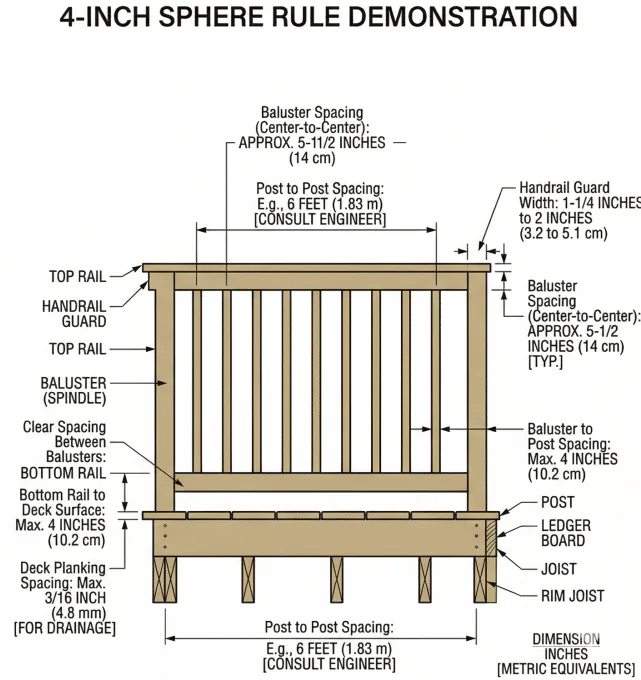
The 4-inch sphere rule governs spacing between railing components, ensuring that no opening allows a 4-inch diameter sphere to pass through. This standard protects young children from slipping through railing openings. Sphere rules are fairly straightforward and apply to all railing systems, with stair railings following a modified 6-inch sphere rule for the triangular space where treads meet risers.
Handrail requirements differ from guardrail specifications. Handrails assist with stair navigation and must be graspable, measuring between 34 and 38 inches high on stairs. Graspability refers to the specific shape requirements that allow secure gripping for support and guidance.
Structural Load Requirements
Railing systems must withstand significant forces to ensure safety. Current codes require railings to resist 200 pounds of concentrated force applied at any point and in any direction. This standard hasn’t changed since 1932, despite increases in average body weight and deck usage patterns.
According to Lerch Bates, deck and stair railings that do not meet code requirements or have excessive deflection present a danger to the public and result in numerous insurance and construction claims. Professional engineers increasingly recommend designing to higher safety factors than minimum code requirements.
Deflection limits, while not explicitly codified for railings, represent critical design considerations. Excessive deflection can cause users to feel unsafe even when railings meet strength requirements. Engineers apply serviceability standards to limit how much railings can flex under load, typically using ratios based on railing height and cantilever length.
Code Compliance Critical
Building codes provide minimum safety standards, but local jurisdictions may impose stricter requirements. Always consult local building officials before finalizing railing plans to ensure full compliance.
Overview of Railing Material Options
Contemporary deck railing materials span traditional wood options like cedar and pressure-treated lumber to advanced engineered systems including aluminum, steel, composite, glass, and cable assemblies. Each material offers distinct performance characteristics regarding strength, durability, maintenance requirements, and aesthetic appeal. Material selection impacts initial cost, long-term maintenance expenses, structural performance, and visual integration with architectural styles. Professional evaluation helps match material properties with specific application requirements and environmental conditions.
The railing material you choose fundamentally determines your deck’s safety performance, maintenance requirements, and aesthetic character. Modern manufacturing has expanded options far beyond traditional wood railings, offering engineered solutions that deliver superior safety with reduced upkeep.
Material categories each excel in different applications. Understanding their strengths and limitations helps identify the optimal choice for your specific situation, climate conditions, and design preferences.
Natural vs. Manufactured Materials
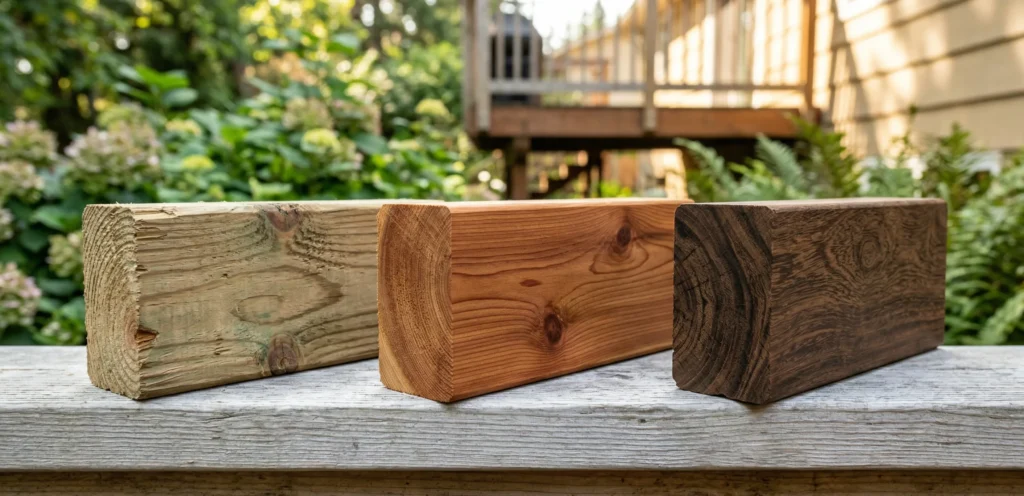
Natural wood railings provide traditional aesthetics and workability but require ongoing maintenance to preserve structural integrity and appearance. Cedar, redwood, and tropical hardwoods offer varying degrees of natural decay resistance, while pressure-treated lumber relies on chemical preservatives for protection.
Manufactured materials like aluminum, steel, composite, and glass systems deliver consistent performance characteristics and typically require less maintenance than wood options. These engineered materials often exceed code requirements with built-in safety margins and predictable long-term performance.
Metal, cable, glass, composite, and more railing types each offer different pros and cons for deck applications, with material choice significantly impacting both function and character of outdoor spaces.
Safety Performance Comparison
Railing safety depends on material strength, connection methods, and resistance to environmental degradation. Metal railings typically provide the highest strength-to-weight ratios and dimensional stability. Glass systems offer excellent strength when properly installed with appropriate thickness and mounting hardware.
Wood railings can provide adequate safety when properly maintained, but are susceptible to decay, insect damage, and moisture-related deterioration that can compromise structural integrity over time. Composite materials bridge the gap between wood aesthetics and manufactured durability.
Cable systems require proper tensioning and quality hardware to maintain safety performance, with tension adjustments needed over time as cables stretch under load and environmental conditions.
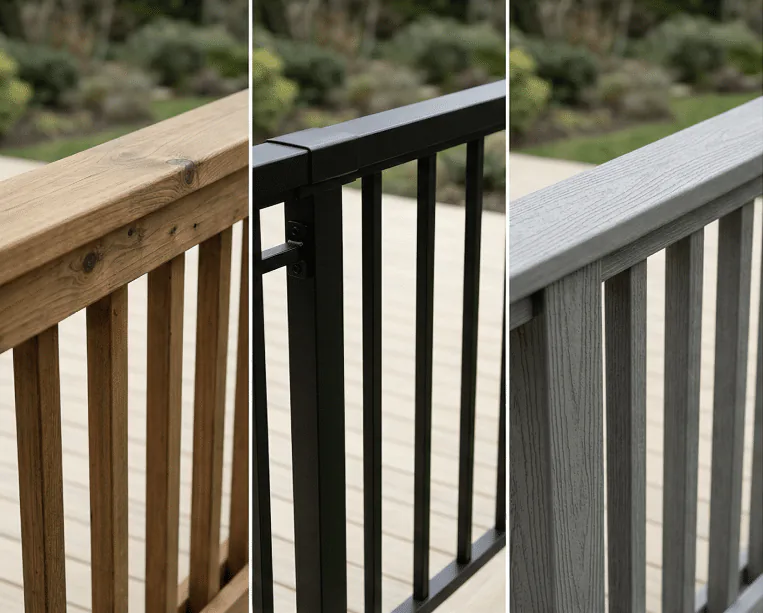
Wood Railing Systems
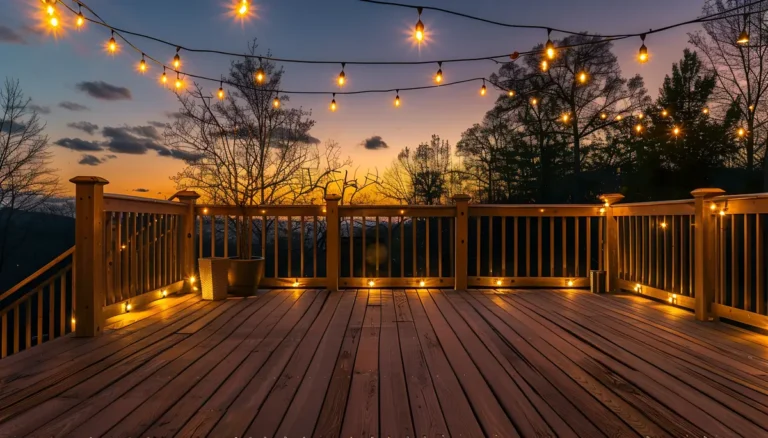
Wood railings offer classic aesthetics and design flexibility using materials ranging from economical pressure-treated pine to premium tropical hardwoods like Ipe. Cedar and redwood provide natural decay resistance with moderate maintenance requirements, while pressure-treated lumber requires regular sealing and staining. Tropical hardwoods deliver exceptional strength and longevity but command higher initial costs. All wood railings need proper installation techniques, adequate drainage, and routine maintenance to prevent moisture damage, decay, and structural deterioration.
Wood remains a popular railing choice for its natural beauty, workability, and ability to complement traditional architectural styles. However, wood’s organic nature makes it susceptible to moisture damage, insect activity, and decay that can compromise safety if not properly maintained.
Different wood species offer varying performance characteristics, from economical pressure-treated options to premium hardwoods that can last decades with minimal care. Understanding these differences helps select appropriate materials for your climate and maintenance preferences.
Pressure-Treated Lumber
Pressure-treated pine provides the most economical wood railing option, using chemical preservatives to resist decay and insect damage. This treatment extends the wood’s lifespan but requires ongoing maintenance including annual cleaning, periodic staining, and regular sealing to maintain protection.
The chemical treatment process can cause the wood to crack, warp, or check as it dries, potentially creating safety hazards if not addressed promptly. Proper installation techniques and regular inspection help identify and correct these issues before they compromise railing integrity.
Pressure-treated railings perform adequately when properly maintained but represent the highest-maintenance wood option. Budget-conscious homeowners often choose this material for its low initial cost, accepting higher long-term maintenance requirements.
Cedar and Redwood Systems
Cedar and redwood offer natural decay resistance through oils and compounds that repel moisture and insects. These premium softwoods provide rich colors and distinctive grain patterns while requiring less chemical treatment than pressure-treated alternatives.
Natural weather resistance makes cedar and redwood railings more durable than pressure-treated options, though they still require periodic sealing or staining to maintain appearance and optimal protection. Without treatment, these woods weather to attractive silver-gray patinas while retaining structural integrity.
Cedar and redwood exhibit distinct grain patterns and deep colors that lend an exotic and luxurious feel to any deck, with tight grains contributing to resistance against warping or splintering over time.
Tropical Hardwood Options
Tropical hardwoods like Ipe, Cumaru, and Garapa represent the premium end of wood railing materials. These dense hardwoods offer exceptional strength, natural decay resistance, and longevity that can extend beyond 25 years with minimal maintenance.
The extreme density of tropical hardwoods provides superior structural performance compared to softwood alternatives. Their natural resistance to moisture, insects, and decay makes them excellent choices for challenging environments including coastal locations and humid climates.
While tropical hardwoods command higher initial costs, their longevity and minimal maintenance requirements often provide better long-term value than less expensive alternatives. Environmental considerations include sourcing from sustainably managed forests with proper certifications.
Wood Maintenance Essential
All wood railings require regular inspection for signs of decay, insect damage, or moisture infiltration. Annual cleaning and periodic refinishing preserve both appearance and structural integrity.
Metal Railing Systems
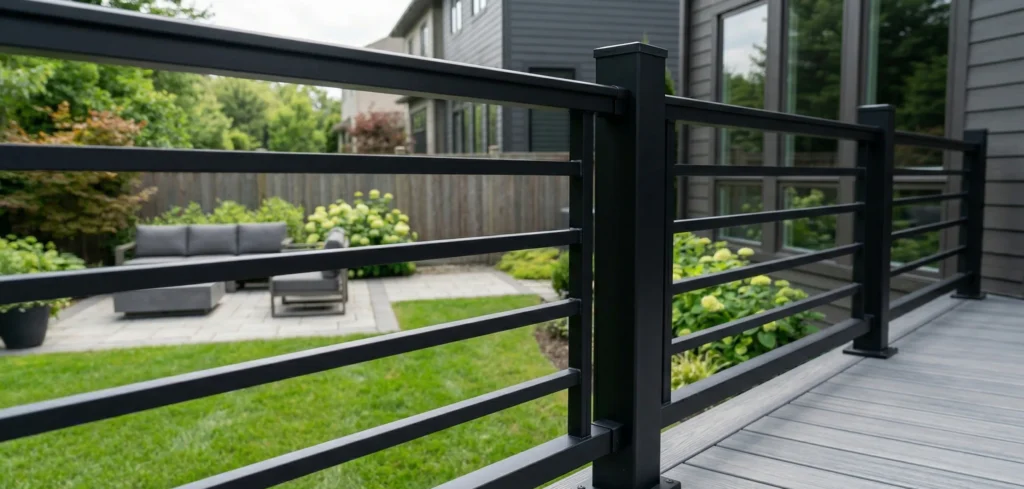
Metal railings using aluminum or steel construction provide exceptional strength, durability, and low maintenance requirements for deck applications. Aluminum systems offer corrosion resistance and lightweight handling, while steel provides maximum strength for longer spans. Powder-coating finishes deliver long-lasting color and weather protection without painting or staining. Pre-welded panel systems simplify installation while ensuring structural integrity. Metal railings excel in challenging environments including coastal areas and regions with extreme weather conditions.
Metal railings have evolved from traditional wrought iron to modern aluminum and steel systems that deliver superior performance with minimal maintenance. Advanced manufacturing techniques and coating technologies have made metal railings increasingly popular for both residential and commercial applications.
The inherent strength of metal allows for sleek, minimalist designs that provide excellent safety performance while maintaining open sight lines. Modern metal railings resist corrosion, fading, and structural degradation better than traditional materials.
Aluminum Railing Systems
Aluminum railings combine lightweight handling with excellent corrosion resistance, making them ideal for residential installations. The material’s natural oxidation resistance eliminates rust concerns, while powder-coating provides additional protection and color options.
Aluminum railings are lightweight, durable, and versatile, with powder-coated finishes that resist rust and corrosion for long lifespans and easy maintenance. Many systems feature pre-welded panels that simplify installation while ensuring proper structural connections.
Aluminum’s thermal properties can make railings hot to touch in direct sunlight and cold in winter weather. However, the material’s dimensional stability and resistance to environmental degradation make it an excellent long-term choice for most climates.
Steel Railing Applications
Steel railings provide maximum strength for applications requiring longer spans between posts or enhanced security. The material’s superior tensile strength allows for more open designs while meeting structural requirements.
Modern steel railings use galvanized or stainless steel construction with powder-coated finishes to prevent corrosion. Proper coating application and quality ensures decades of service without rust or degradation.
Steel’s weight requires more robust mounting systems but provides unmatched stability and security. Professional installation typically ensures proper structural connections and code compliance for steel railing systems.
Installation and Maintenance
Metal railing systems often feature pre-engineered components that simplify installation while ensuring code compliance. Many manufacturers provide pre-welded panels with integrated balusters, reducing field assembly requirements.
Maintenance involves periodic cleaning with mild soap and water, with no painting, staining, or sealing required. Quality powder-coated finishes can last decades without refinishing, making metal railings among the lowest-maintenance options available.
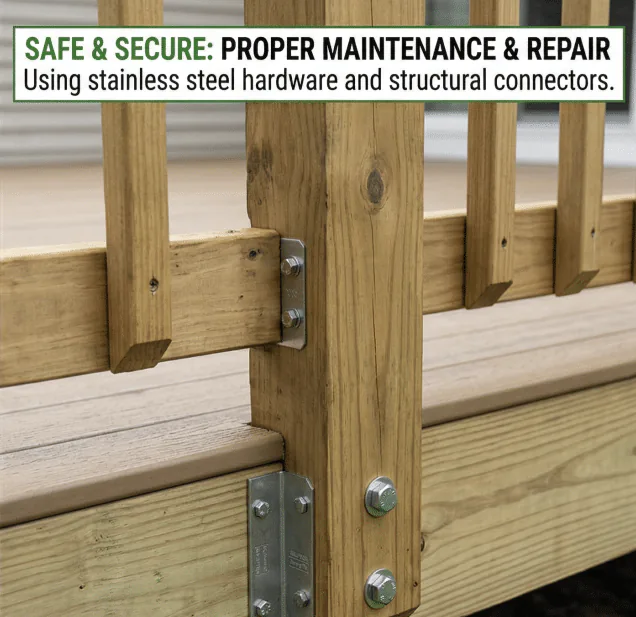
Fastener selection proves critical for long-term performance, particularly in coastal environments where salt air can accelerate corrosion of inferior hardware. Stainless steel or specially coated fasteners prevent galvanic reactions and ensure lasting connections.
Composite Railing Options
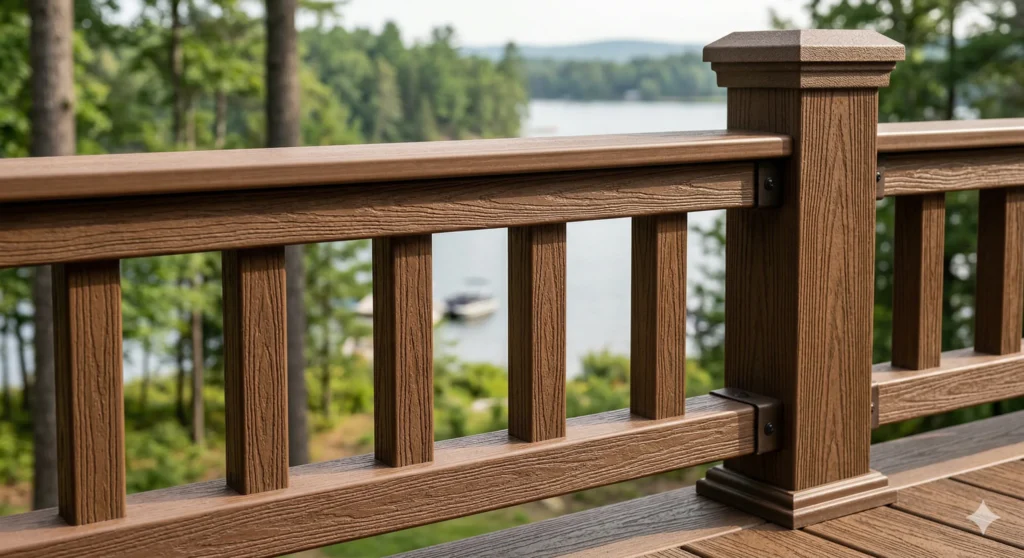
Composite railings combine wood fibers with recycled plastics to create low-maintenance systems that mimic wood aesthetics without ongoing care requirements. Modern composite materials resist fading, staining, cracking, and insect damage while providing consistent performance across temperature variations. Many systems incorporate protective capping that enhances durability and appearance retention. Composite railings eliminate painting, staining, and sealing needs, requiring only periodic cleaning for maintenance. Environmental benefits include recycled content and reduced chemical treatments.
Composite railings represent engineered solutions that bridge the gap between natural wood aesthetics and manufactured durability. These systems combine wood fibers with polymer resins to create materials that resist common wood problems while maintaining familiar appearance characteristics.
Modern composite technology has advanced significantly, with current products offering improved color retention, strength, and surface quality compared to earlier generations. Understanding these improvements helps evaluate composite options against traditional materials.
Material Composition and Benefits
Composite railing materials typically contain 50-70% wood fiber combined with recycled plastic polymers and specialized additives. This composition provides wood-like appearance and texture while eliminating susceptibility to moisture damage, insect activity, and decay.
Composite materials are designed to last and resist weathering, fading, and staining while not rotting, cracking, or warping like traditional wood. The manufacturing process allows for consistent color throughout the material, reducing visible damage from minor impacts.
Environmental advantages include high recycled content, elimination of chemical preservatives, and reduced maintenance chemical usage. Many composite products contain recycled plastic bottles and bags, supporting waste reduction initiatives.
Performance Characteristics
Composite railings provide excellent dimensional stability across temperature variations, resisting the expansion and contraction that can loosen fasteners in wood systems. The material doesn’t splinter, eliminating safety concerns associated with deteriorating wood railings.
Surface treatments and capping technologies protect against UV damage and enhance stain resistance. Quality composite systems maintain their appearance for decades without refinishing, though periodic cleaning with soap and water keeps them looking optimal.
Structural performance varies by manufacturer and product line, with premium systems meeting or exceeding building code requirements. Some composite railings use wood or metal structural frames with composite sleeves, combining strength with low-maintenance surfaces.
Installation Considerations
Composite railing installation follows similar techniques to wood systems but may require specialized fasteners or hardware designed for composite materials. Thermal expansion properties need consideration in fastener spacing and connection details.
Many composite systems feature color-matched components including posts, rails, balusters, and trim pieces that create seamless integrated appearances. Pre-designed kits simplify material ordering and installation planning.
Professional installation ensures proper fastener selection, adequate expansion allowances, and structural connections that maintain long-term performance. Quality installation prevents common problems like loosening connections or visible fasteners.
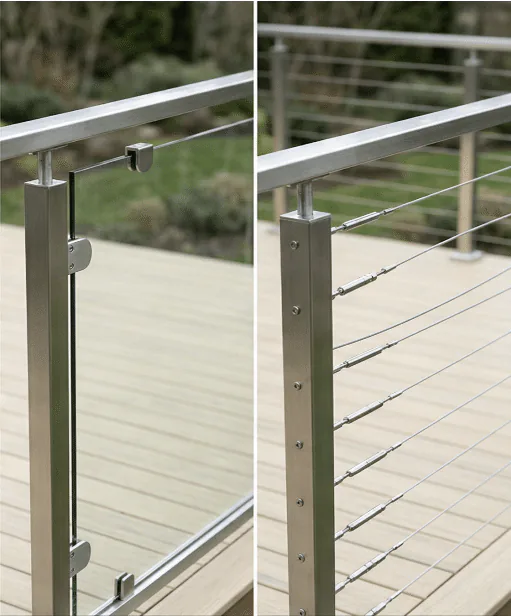
Glass Railing Systems
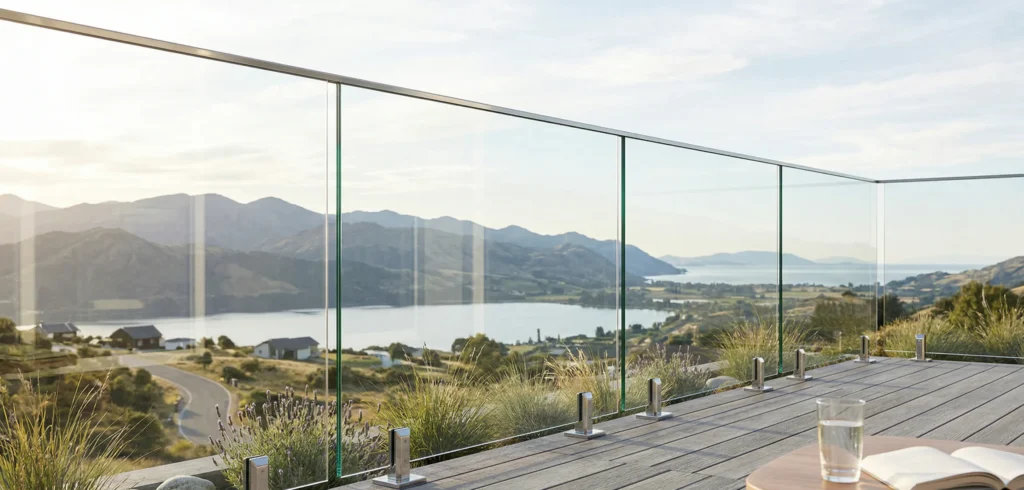
Glass railings provide unobstructed views and contemporary aesthetics using tempered or laminated glass panels supported by metal frames or minimal hardware systems. Tempered glass offers strength four to five times greater than standard glass, while laminated glass provides enhanced safety through multiple layers with interlayer bonding. Frameless systems maximize transparency, while framed options provide additional structural support. Professional installation ensures proper glass thickness, mounting techniques, and code compliance for optimal safety and performance.
Glass railings have gained popularity for their ability to provide safety barriers without obstructing views, making them particularly valuable for decks overlooking scenic landscapes or water features. Modern glass technology and installation techniques have made these systems increasingly practical for residential applications.
Safety performance depends on proper glass selection, adequate thickness, and appropriate mounting systems. Understanding these technical requirements helps ensure glass railings deliver both aesthetic and safety benefits.
Glass Types and Safety Features
Tempered glass provides the foundation for most residential glass railing systems, offering strength levels four to five times greater than standard glass. The tempering process creates controlled stress patterns that cause the glass to break into small, relatively harmless pieces rather than dangerous shards.
Laminated glass consists of multiple glass layers bonded with polymer interlayers that hold the glass together even when cracked. ViewRail explains that glass railing is an extremely safe option with no gaps between panels, no decay or rust, and glass stabilizers creating significantly stronger barriers than traditional railings.
Thickness requirements typically range from 1/2 inch for tempered glass to 9/16 inch for laminated systems, with local codes potentially specifying minimum thicknesses for different applications. Professional consultation ensures appropriate glass selection for specific installations.
Installation Systems
Frameless glass systems create the most transparent appearance using minimal hardware to secure glass panels. These systems require precise installation and quality mounting hardware to ensure adequate strength and code compliance.
Framed systems use metal posts and rails to support glass panels, providing additional structural capacity while maintaining excellent visibility. Framed options often accommodate wider spans between support points and offer enhanced mounting flexibility.
Proper installation is crucial to ensure the safety and longevity of glass railings, with professional installers able to identify potential issues and address them before installation.
Maintenance and Durability
Glass railings require regular cleaning to maintain transparency and aesthetic appeal, with frequency depending on environmental conditions. Standard glass cleaners and microfiber cloths typically provide adequate cleaning without scratching surfaces.
Durability concerns include potential scratching from abrasive contact and possible thermal stress in extreme temperature variations. Quality glass and proper installation minimize these risks while providing decades of service life.
Hardware inspection ensures mounting systems remain secure over time, with particular attention to gaskets, clamps, and fasteners that could loosen under thermal cycling or structural loads.
Professional Installation Critical
Glass railing systems require professional installation to ensure proper glass thickness, mounting techniques, and structural connections that meet code requirements and provide optimal safety.
Cable Railing Systems
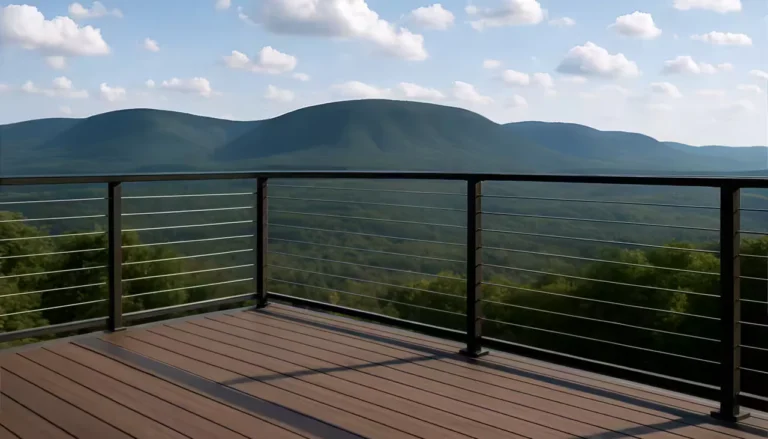
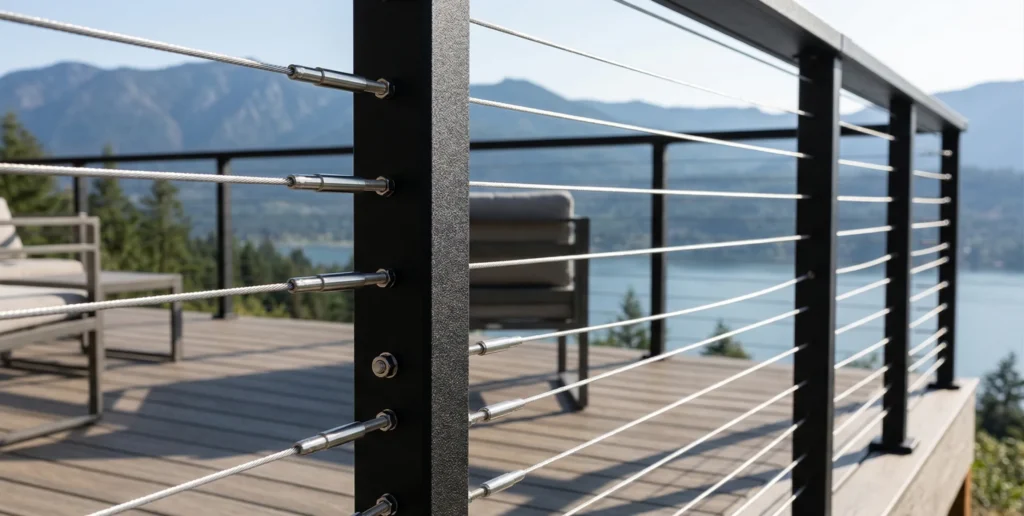
Cable railings use horizontal stainless steel cables tensioned between posts to create modern, low-profile barriers that maximize views while meeting safety codes. Proper cable spacing and tensioning ensure compliance with 4-inch sphere rules, preventing passage of small children while maintaining structural integrity. Quality systems use 1×19 stainless steel cable construction for optimal strength and stretch resistance. Installation requires precise post spacing, proper tensioning techniques, and periodic adjustment to maintain code compliance and safety performance.
Cable railing systems offer contemporary aesthetics with minimal visual obstruction, making them particularly popular for modern architectural styles and applications where preserving views takes priority. These systems combine engineered performance with sleek appearances.
Safety performance depends on proper cable selection, adequate tensioning, and quality hardware systems. Understanding these technical requirements ensures cable railings provide reliable protection while maintaining their distinctive appearance characteristics.
Cable Specifications and Safety
Stainless steel cables provide the strength and corrosion resistance needed for exterior railing applications. The recommended configuration uses 1×19 cable construction, featuring 19 individual wires woven together for optimal strength and flexibility characteristics.
Cable spacing must comply with building code sphere rules, typically requiring 3 to 3.5-inch spacing to account for cable stretch under load. Cable railing systems are subject to sphere rules, handrail and guardrail height requirements, and load requirements when built to code.
Proper tensioning proves critical for both safety and code compliance. Cables must remain taut enough to prevent a 4-inch sphere from passing through, even under deflection loads. Quality hardware systems allow for tension adjustment as cables stretch over time.
Post Requirements and Installation
Cable systems require strong posts capable of resisting high tension loads without bowing or deflecting excessively. Post spacing typically cannot exceed 4 feet on center for structural posts, with intermediate posts potentially needed for longer runs.
Posts should be strong enough not to bow under high tension, with properly engineered hardware systems withstanding all required forces. Professional engineering review ensures structural adequacy for specific applications.
Installation requires precise measurements and proper tensioning procedures. Starting with center cables and working toward top and bottom runs helps achieve uniform tension and appearance throughout the system.
Maintenance and Adjustments
Cable railings require periodic tension adjustments as stainless steel cables stretch under load and environmental conditions. Quality hardware systems include tensioning mechanisms that allow for easy adjustment using standard tools.
Cleaning involves removing accumulated debris and periodic washing with mild soap solutions. Stainless steel components resist corrosion but benefit from regular cleaning in coastal or industrial environments.
Regular inspection identifies cables that may have loosened beyond acceptable limits or hardware showing signs of wear or corrosion. Prompt adjustment maintains both code compliance and optimal appearance.
Tension Maintenance Key
Cable railings require periodic tension adjustment to maintain code compliance and safety. Quality systems include hardware that allows easy adjustment using standard Allen wrenches or similar tools.Installation and Structural Safety
Proper railing installation requires adequate post spacing, secure mounting to structural members, and correct fastener selection to ensure long-term safety and code compliance. Post foundations must transfer loads to solid structural elements, with through-bolting preferred over lag screws for critical connections. Flashing and drainage details prevent moisture infiltration that can compromise structural integrity over time. Professional installation ensures proper connection techniques, appropriate hardware selection, and adherence to manufacturer specifications and building codes.
Installation quality directly determines railing safety and longevity regardless of material choice. Poor installation techniques can compromise even premium materials, while proper methods ensure adequate performance from basic systems.
Critical installation factors include post spacing, mounting techniques, fastener selection, and moisture protection. Understanding these requirements helps evaluate installation quality and identify potential safety concerns.
Post Spacing and Structural Connections
Post spacing requirements vary by material and system design, with most residential applications limiting spacing to 6-8 feet on center. Longer spans require larger posts or intermediate supports to maintain structural adequacy.
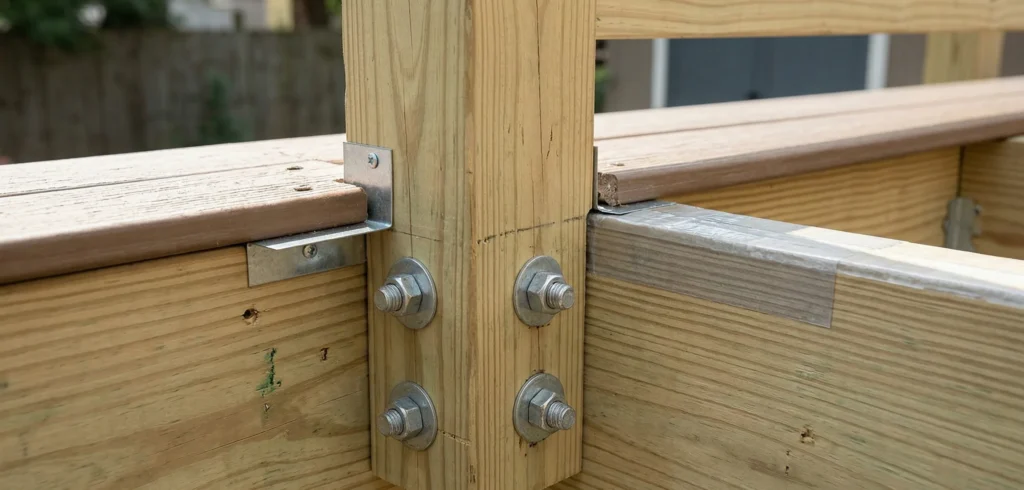
Pennsylvania code specifies that maximum post spacing for guardrails is 8 feet on center post to post, with posts fastened by through-bolts, rivets, or tap bolts with plates or washers as detailed in the regulations. Through-bolt connections provide superior holding power compared to lag screws, particularly for tall railings subjected to lateral loads.
Mounting surface strength proves critical for safety. Posts must connect to structural deck members capable of transferring loads to the foundation system. Surface-mounted connections to thin decking materials often prove inadequate for code-required loads.
Fastener Selection and Corrosion Resistance
Fastener quality and corrosion resistance directly impact long-term safety, particularly in coastal environments where salt air accelerates metal degradation. Stainless steel fasteners provide optimal corrosion resistance but command higher costs than galvanized alternatives.
No matter how you secure your decking, you must use corrosive-resistant deck fasteners, as many have inferior, thin, electroplated galvanized coatings. Quality fasteners maintain their strength and appearance over decades of service.
Fastener sizing must match structural loads, with larger diameter fasteners typically providing better long-term performance. Professional installation ensures appropriate fastener selection for specific materials and loading conditions.
Moisture Protection and Drainage
Proper flashing and drainage details prevent moisture infiltration that can cause hidden structural damage over time. Water entry at railing connections represents a common source of premature failure in wood structures.
Flashing installation requires careful attention to overlapping sequences and sealing details. Improper flashing can actually trap moisture rather than exclude it, accelerating structural deterioration.
Drainage considerations include sloping surfaces away from connections, providing weep holes where appropriate, and ensuring adequate ventilation to promote drying after moisture exposure.
Common Failures and Prevention Strategies
Deck railing failures result from inadequate structural connections, insufficient post spacing, improper fastener selection, moisture infiltration, and inadequate maintenance practices. The most common failure mode involves railings pulling away from mounting points due to undersized or corroded fasteners. Regular inspection identifies loose connections, material deterioration, and moisture damage before they compromise safety. Professional evaluation provides expert assessment of structural adequacy and identification of potential failure points requiring attention.
Understanding common failure modes helps identify potential problems before they compromise safety. Most railing failures result from predictable causes that can be prevented through proper design, installation, and maintenance practices.
Statistical analysis reveals patterns in railing failures that inform prevention strategies. According to forensic engineering data, connection failures represent the most frequent cause of railing collapse incidents.
Connection and Fastener Failures
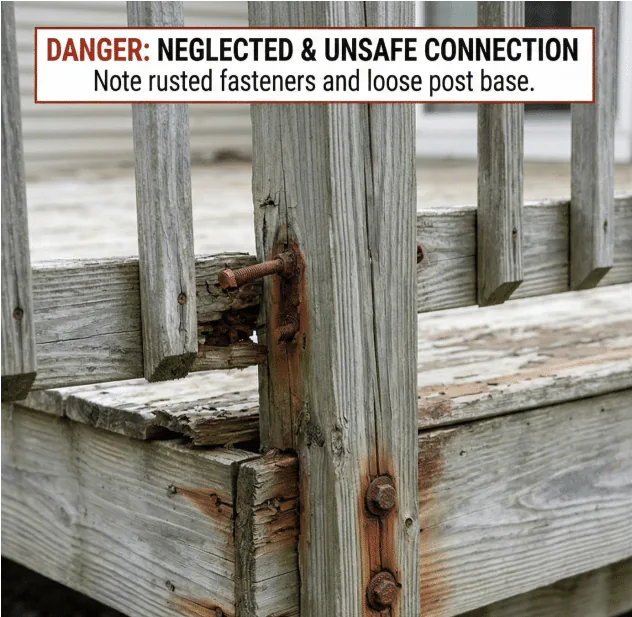
Inadequate connections represent the primary cause of railing failures, often involving undersized fasteners, improper mounting techniques, or insufficient penetration into structural members. These failures typically occur gradually as fasteners loosen or corrode over time.
Robson Forensic reports that there are more injuries related to railing failures than any other portion of a deck, with investigations often revealing that railing posts were not installed correctly and could not withstand specified lateral load requirements.
Prevention strategies include using appropriately sized fasteners, ensuring adequate penetration depths, and selecting corrosion-resistant hardware. Regular inspection identifies loosening connections before they reach failure points.
Material Degradation Issues
Wood railings face particular vulnerability to moisture damage, insect activity, and decay that can compromise structural integrity. Hidden damage often develops in connection areas where moisture can accumulate undetected.
Metal systems can experience corrosion failures, particularly at connection points where dissimilar metals create galvanic reactions. Coating damage exposes underlying metal to corrosion that weakens structural capacity over time.
Composite and manufactured materials generally resist degradation better than natural materials but can experience failures from UV exposure, thermal cycling, or impact damage that compromises structural properties.
Inspection and Maintenance Protocols
Regular inspection schedules help identify developing problems before they reach critical stages. Annual inspections should focus on connection points, material condition, and any signs of movement or deterioration.
The Professional Structural Engineers organization notes that with 40 million decks in the United States that are more than 20 years old, it’s important for homeowners to check their deck, preferably with the assistance of a qualified engineer, builder, or home inspector.
Maintenance protocols should address specific material requirements, environmental conditions, and usage patterns. Prompt attention to identified issues prevents minor problems from developing into safety hazards.
Annual Inspection Essential
Railing systems require annual safety inspections focusing on connection integrity, material condition, and code compliance. Professional evaluation provides expert assessment of structural adequacy.
Cost Analysis and Value Considerations
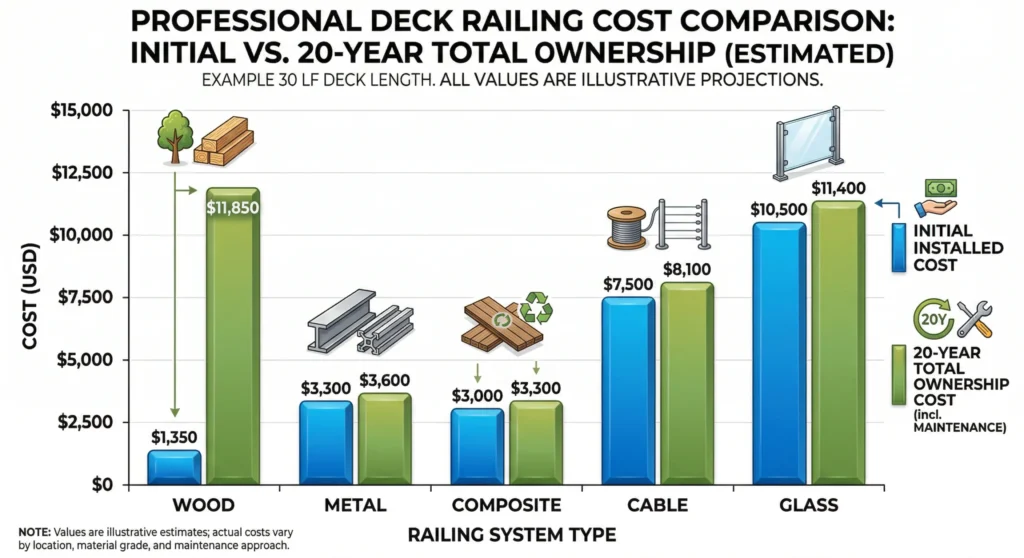
Railing costs vary significantly from economical pressure-treated wood systems ($15-30/linear foot installed) to premium glass installations ($100-200/linear foot). Initial material costs represent only part of total ownership expenses, with maintenance requirements, longevity expectations, and replacement schedules affecting long-term value. Professional installation typically adds $10-25/linear foot but ensures code compliance and optimal performance. Quality systems provide better value through extended service life, reduced maintenance costs, and enhanced safety performance compared to economy alternatives.
Evaluating railing costs requires consideration of both initial investment and long-term ownership expenses. Materials with higher upfront costs often provide better value through reduced maintenance requirements and extended service life.
Professional installation costs represent worthwhile investments that ensure code compliance, optimal performance, and manufacturer warranty protection. Quality installation prevents costly repairs and potential safety issues.
Material Cost Comparison
Wood railing costs range from $15-30 per linear foot for pressure-treated systems to $40-80 per linear foot for premium hardwood installations. These costs include basic hardware but exclude professional installation labor.
Metal railings typically cost $30-60 per linear foot for aluminum systems and $40-80 per linear foot for steel installations. Pre-engineered systems often provide better value than custom fabricated alternatives while ensuring code compliance.
Composite railings range from $25-50 per linear foot, while glass systems cost $75-150 per linear foot depending on complexity and hardware requirements. Cable railings typically cost $40-80 per linear foot including tensioning hardware.
Installation and Labor Considerations
Professional installation adds $10-25 per linear foot depending on system complexity, site conditions, and regional labor rates. Complex systems like glass or cable railings require specialized skills that command premium pricing.
DIY installation can reduce costs but requires appropriate skills, tools, and knowledge of building codes. Mistakes in DIY installation can result in safety hazards and costly corrections that exceed professional installation savings.
Professional installation ensures that railings meet building code requirements and provide optimal safety performance, while also maintaining manufacturer warranty coverage.
Long-Term Value Analysis
Total cost of ownership includes maintenance expenses, replacement schedules, and potential safety liability costs. Low-maintenance materials like metal and composite systems often provide better long-term value despite higher initial costs.
Quality installations typically last longer and require fewer repairs than economy alternatives. Professional installation also ensures compliance with building codes and manufacturer specifications that protect warranty coverage.
Safety considerations include potential liability costs associated with railing failures or injuries. Quality systems with professional installation minimize these risks while providing peace of mind for homeowners.
Free Design Resource
The Ultimate Guide to Custom Deck Design & Construction
Want to dive deeper before scheduling a consultation? Download our comprehensive whitepaper to explore material comparisons, safety codes, and expert layout tips.
- Material Comparison & Lifespans
- Safety Guidelines & Building Codes
- Budget Optimization Strategies
Frequently Asked Questions
What are the minimum height requirements for deck railings?
Residential deck railings must be at least 36 inches high measured from the deck surface, while commercial applications require 42-inch minimum heights. These measurements reflect safety research into human center of gravity and fall prevention. Some local jurisdictions may require taller railings, so always check with local building officials before finalizing railing plans.
How do I know if my existing railings meet current safety codes?
General safety codes require railings to withstand 200 pounds of force in any direction and comply with 4-inch sphere rules for spacing between components. Annual professional inspections can assess code compliance, structural integrity, and identify potential safety issues. Signs of concern include loose connections, excessive deflection when pressure is applied, visible deterioration, or spacing that allows passage of a 4-inch sphere.
Which railing material provides the best long-term value?
Long-term value depends on your specific situation, but metal and composite railings typically provide superior value through low maintenance requirements and extended service life. While these materials cost more initially, they eliminate ongoing staining, sealing, and repair expenses associated with wood systems. Quality installation and material selection significantly impact long-term performance regardless of material choice.
Can I install deck railings myself, or should I hire a professional?
While some experienced DIYers can install basic railing systems, professional installation ensures code compliance, structural adequacy, and manufacturer warranty protection. Complex systems like glass or cable railings require specialized knowledge and tools that make professional installation advisable. Mistakes in railing installation can create serious safety hazards and expensive corrections.
How often should deck railings be inspected for safety?
Deck railings should receive annual safety inspections focusing on connection integrity, material condition, and any signs of deterioration or movement. Additional inspections are recommended after severe weather events or before hosting large gatherings. Professional inspections every 3-5 years provide expert assessment of structural adequacy and identification of developing issues.
What causes most deck railing failures?
Most railing failures result from inadequate connections, including undersized fasteners, improper mounting techniques, or corrosion of connection hardware. Moisture infiltration represents another common cause, particularly in wood systems where hidden decay can compromise structural integrity. Regular inspection and proper maintenance prevent most failure modes from developing into safety hazards.
Are glass railings safe for families with children?
Glass railings using proper tempered or laminated glass provide excellent safety for families when professionally installed. Tempered glass is four to five times stronger than standard glass and breaks into small, relatively harmless pieces if damaged. Glass systems eliminate gaps that could allow small children to pass through, unlike traditional railing designs. Professional installation ensures appropriate glass thickness and mounting techniques for optimal safety.
How do cable railings maintain safety with horizontal members?
Cable railings maintain safety through proper spacing and tensioning that prevents 4-inch spheres from passing through even under deflection loads. Quality systems use 1×19 stainless steel cable construction for optimal strength and minimal stretch. Proper tensioning and periodic adjustment ensure continued code compliance. Some jurisdictions have specific requirements for horizontal railing systems, so local code consultation is recommended.