Key Takeaways
Pressure-Treated Wood
- Durability: Moderate
- Maintenace: High
- Cost Range: $
- Lifespan: 10-15 years
Cedar/Redwood
- Durability: Moderate
- Maintenace: Medium-High
- Cost Range: $$
- Lifespan: 15-20 years
Tropical Hardwoods
- Durability: Very High
- Maintenace: Low
- Cost Range: $$$
- Lifespan: 25+ years
Composite
- Durability: High
- Maintenace: Low
- Cost Range: $$$
- Lifespan: 25-30 years
PVC/Vinyl
- Durability: High
- Maintenace: Very Low
- Cost Range: $$$
- Lifespan: 25-30 years
Aluminum
- Durability: Very High
- Maintenace: Very Low
- Cost Range: $$$$
- Lifespan: 30+ years
Introduction to Decking Materials
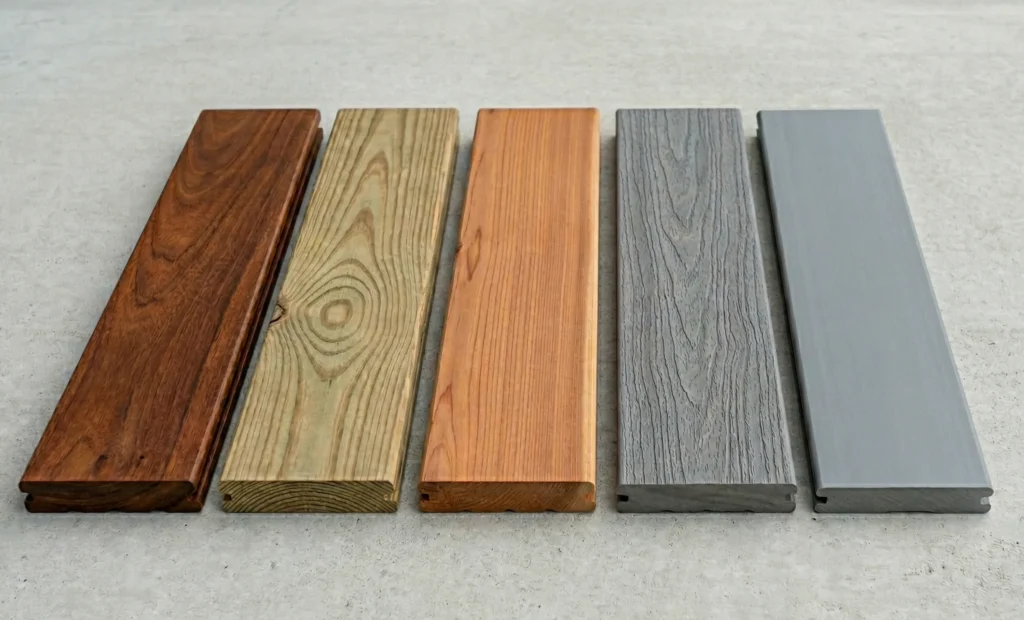
Selecting the right decking material directly impacts your outdoor space’s appearance, durability, maintenance requirements, and overall cost. Options range from traditional woods like pressure-treated pine, cedar, and tropical hardwoods to modern alternatives including composite, PVC, and aluminum. Each material offers distinct advantages based on your climate, budget, and maintenance preferences. The right choice enhances long-term enjoyment and property value.
Choosing the right decking material is one of the most important decisions you’ll make when planning your outdoor living space. Not only will it affect the appearance of your deck, but it will also determine its durability, maintenance requirements, and overall cost. With so many options available today, understanding the pros and cons of each material type is essential to making an informed decision.
Deck materials significantly impact the overall lifespan, appearance, and budget of your outdoor living space. Whether you’re building a new deck or replacing an old one, your choice of materials will have a significant impact on the long-term enjoyment and value of your outdoor space.
In this comprehensive guide, we’ll explore the various types of decking materials available, from traditional wood options to modern composites and specialty materials. We’ll compare their strengths and weaknesses, helping you find the perfect match for your climate, budget, and maintenance preferences.
Build Your Dream Outdoor Space
Looking to transform your backyard with a custom deck? Discover design options, material insights, and expert tips in our comprehensive guide.
Custom Deck Design & Construction: Transform Your Outdoor Living Space
Wood Decking Options
Wood remains America’s predominant decking choice, offering natural beauty and classic appeal. Pressure-treated pine provides affordability ($3.65-$9.60/sq.ft) but requires regular maintenance. Cedar and redwood deliver richer aesthetics with natural decay resistance, lasting 15-20 years with proper care. Premium tropical hardwoods like Ipe offer exceptional density and durability, lasting 25+ years with minimal upkeep, though at higher cost ($8.50-$16/sq.ft).
Wood has been the traditional choice for decking materials for generations, offering natural beauty and a classic appeal that many homeowners prefer. According to Buffalo Lumber, Wood remains the predominant decking choice across America, outpacing all alternative materials. Wood decking comes in several varieties, each with its own characteristics, advantages, and maintenance requirements.
Pressure-Treated Wood
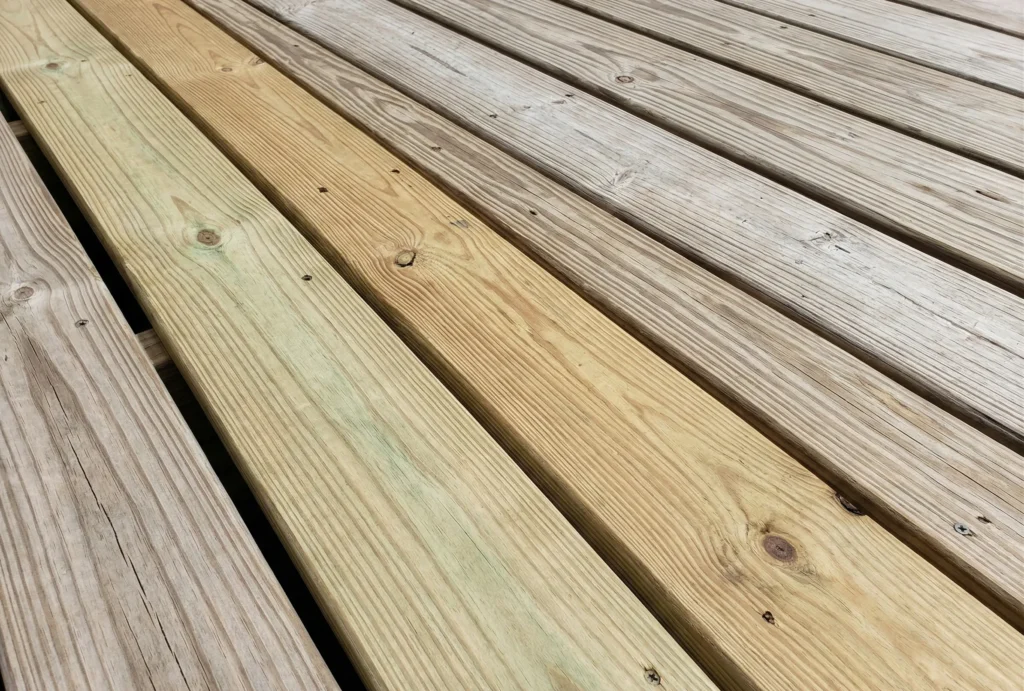
Pressure-treated wood, typically made from pine, is one of the most affordable and readily available decking options. The wood undergoes a chemical treatment process that makes it resistant to rot, insects, and fungal decay.
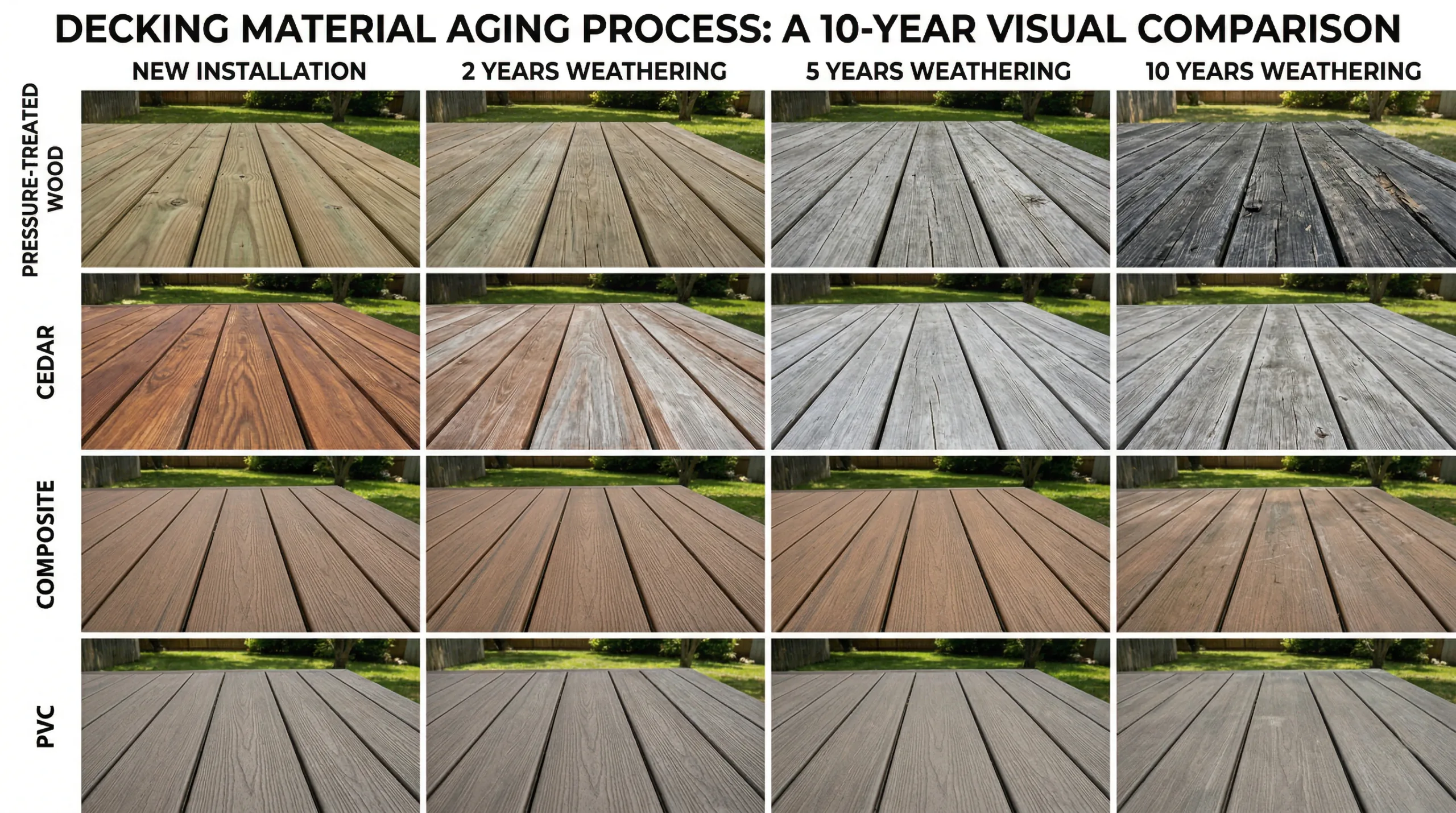
While pressure-treated wood offers good value for budget-conscious homeowners, it does have some drawbacks. It requires regular maintenance including cleaning, staining, and sealing every 1-2 years to maintain its appearance and protect it from the elements. Neglecting proper care leads to warping, cracking, and splintering over time.
Lawn Love notes that pressure-treated pine decking typically costs “$3.65 – $9.60 per square foot” for materials, making it an economical choice for those on a budget. However, the lower upfront cost should be weighed against the ongoing maintenance expenses and shorter lifespan compared to other materials.
Cedar and Redwood
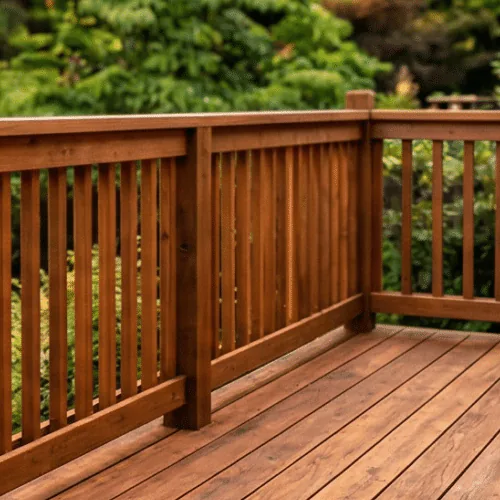
Cedar and redwood are premium softwood options that offer natural beauty and inherent resistance to decay and insects without the use of chemical treatments. Their rich, warm tones and distinctive grain patterns make them attractive choices for homeowners who prefer a natural aesthetic.
These woods contain natural oils and tannins that provide some protection against moisture, rot, and pests. When properly maintained, Western Red Cedar decking offers exceptional longevity, lasting between 30 and 50 years with proper maintenance.
While cedar and redwood are more expensive than pressure-treated pine, they offer better durability and a more refined appearance. They do require regular maintenance, including cleaning and re-sealing or staining every 1-3 years to preserve their natural color and protect against weathering. Without treatment, these woods will naturally weather to a silvery-gray patina over time.
Tropical Hardwoods
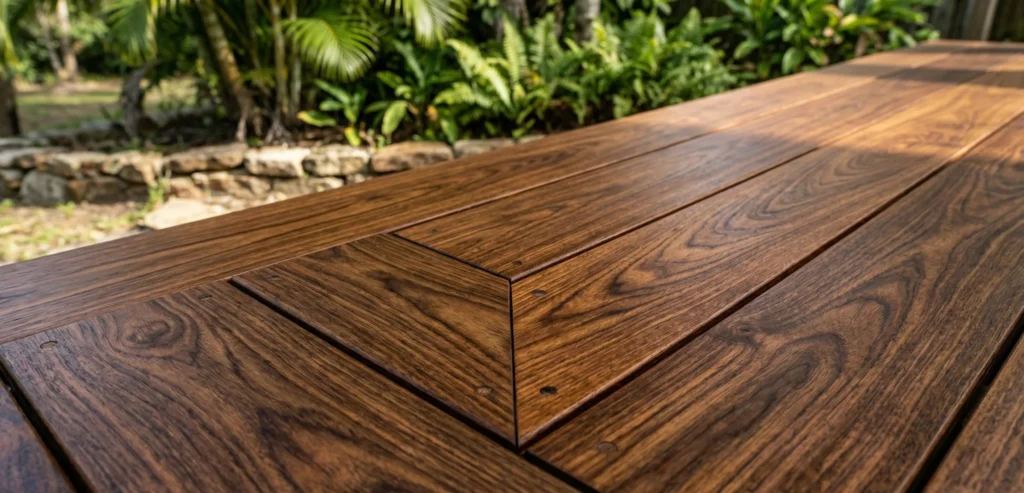
Tropical hardwoods like Ipe, Cumaru, Tigerwood, and Garapa represent the premium end of wood decking materials. These exotic hardwoods are renowned for their exceptional density, durability, and natural resistance to rot, insects, and even fire in some cases.
Tropical hardwoods excel in humid environments due to their natural resistance to moisture absorption, making them excellent choices for humid or coastal environments.
Though tropical hardwoods come with a higher price tag—typically $8.50 to $16 per square foot according to Lawn Love—they offer unmatched durability and can last 25+ years with minimal maintenance. Their natural beauty, rich colors, and grain patterns add a luxurious touch to any outdoor space.
Unlike softer woods, these hardwoods require fewer treatments and are suitable for weathering naturally to a silvery patina without compromising their structural integrity. However, to maintain their original color, an application of UV-protective oil is required every 1-3 years.
Natural Wood Benefits
Natural wood decking offers benefits beyond aesthetics. As Buffalo Lumber explains, “Real wood deck surfaces are cooler underfoot than composite and PVC decking, and warmer to the touch in winter.”Composite Decking Materials
Composite decking combines wood fibers and recycled plastic to deliver wood-like aesthetics with superior durability and minimal maintenance. These boards don’t require staining, sealing, or sanding—only occasional cleaning with soap and water. Available in diverse colors and textures that convincingly mimic real wood, many products feature protective capping that enhances resistance to fading, staining, and mold. Though initially costlier ($5-$11/sq.ft), long-term maintenance savings make composite increasingly popular.
PVC and Vinyl Decking
Composite decking has revolutionized the outdoor living industry by offering a low-maintenance alternative to traditional wood. Made from a blend of wood fibers and recycled plastic, composite materials combine the natural look of wood with enhanced durability and weather resistance.
Composite deck boards combine wood fibers, plastic, and specialized additives to deliver superior durability with minimal maintenance requirements compared to traditional wood options. This makes composite an increasingly popular choice for homeowners looking to balance aesthetics with practicality.
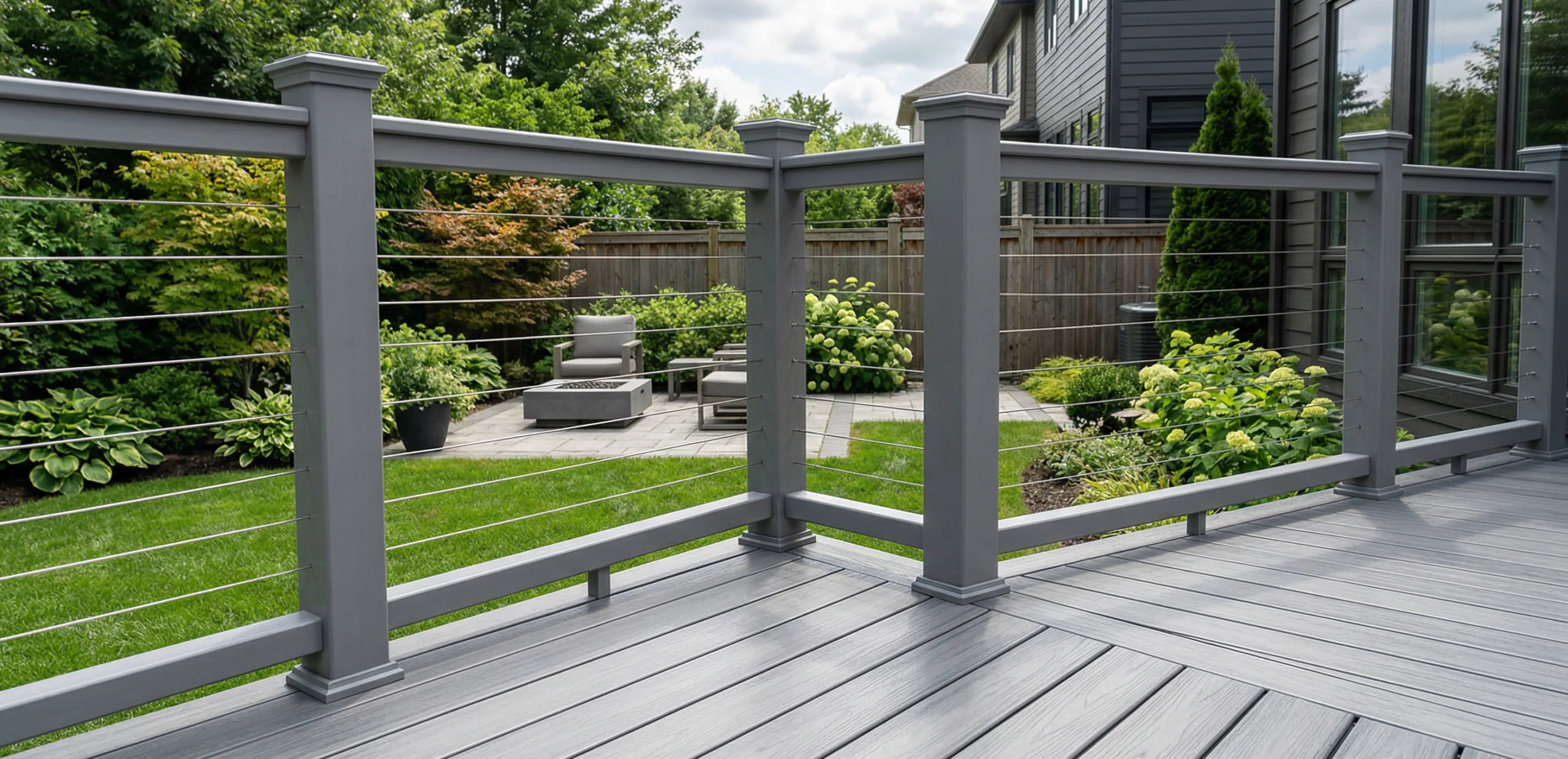
Modern composite decking is available in a wide range of colors, textures, and styles that convincingly mimic the appearance of real wood. Many products feature a protective cap or shell that enhances resistance to fading, staining, scratching, and mold.
While the initial cost of composite decking is higher than most wood options—ranging from $5 to $11 per square foot for materials alone according to Lawn Love—the long-term savings on maintenance can make it a cost-effective choice over time.
Maintenance Tip
Composite decking requires minimal maintenance, usually just periodic cleaning with soap and water. No need for staining, sealing, or sanding—saving you time and money over the long term.
Aluminum Decking
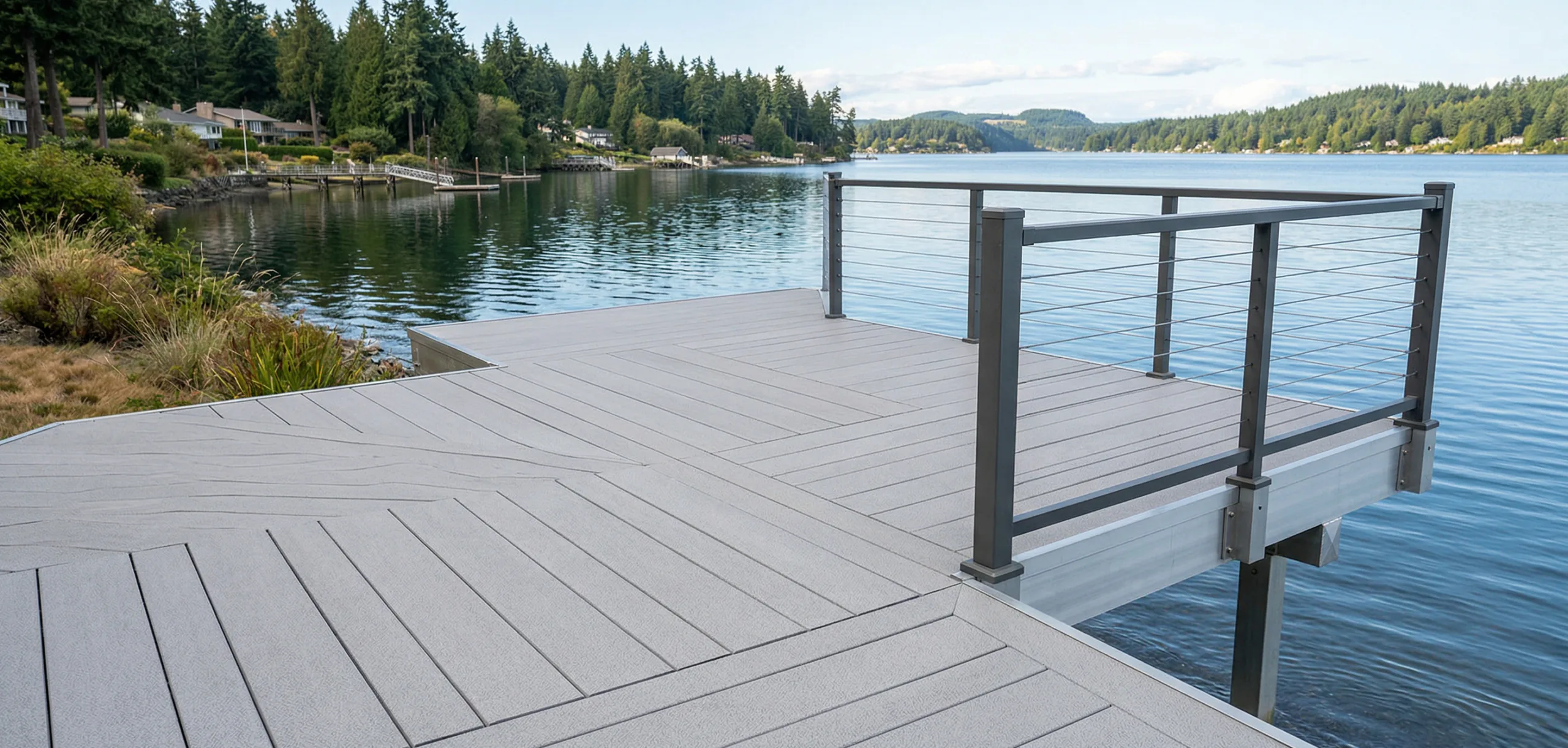
Aluminum decking provides unmatched strength, longevity, and fire resistance while remaining completely impervious to water, mold, insects, and decay. Many systems feature interlocking designs creating watertight surfaces for dry storage underneath. The material dissipates heat efficiently, staying cooler underfoot than other options. Though costlier upfront, aluminum excels in challenging environments like waterfront properties, rooftop decks, and areas with extreme weather, with a lifespan exceeding 30 years.
Aluminum decking is a premium option that offers unmatched durability and longevity among decking materials. Though less common in residential applications, it’s gaining popularity for its exceptional performance in challenging environments.
Aluminum decking provides unmatched strength, longevity, and fire resistance while offering various color options to complement any design aesthetic, and won’t rot or decay. These qualities make it particularly suitable for waterfront properties, rooftop decks, or areas prone to extreme weather conditions.
Aluminum decking offers several unique advantages. It’s completely impervious to water, mold, insects, and fire. It won’t warp, crack, split, or fade over time. Many aluminum decking systems feature interlocking designs that create a watertight surface, allowing for dry storage space underneath the deck. The material remains cooler underfoot than other decking options because it efficiently dissipates heat rather than absorbing it.
The main drawbacks of aluminum decking are its higher cost and industrial appearance, though many modern products are designed with textured, powder-coated surfaces in various colors to mimic the look of painted wood. It creates more noise when walked on compared to other materials, although modern systems incorporate noise-reduction features.
Did You Know?
Aluminum decking is not only extremely durable but also 100% recyclable, making it an environmentally friendly choice despite being a manufactured material.
Choosing the Right Material for Your Climate
Climate conditions directly impact decking performance and longevity. Hot, dry regions demand UV-resistant materials like tropical hardwoods or light-colored composites. Humid environments require moisture-resistant options such as PVC, capped composite, or tropical hardwoods. Cold regions benefit from composite or aluminum that withstands freeze-thaw cycles. Coastal areas need specially engineered materials like PVC, aluminum with marine-grade finish, or Ipe to combat salt air corrosion.
Your local climate is one of the most important factors to consider when selecting a decking material. Different materials perform better in certain weather conditions, and choosing the right one for your environment significantly extends the life of your deck.
All decking materials face continuous exposure to environmental elements, with sunlight, precipitation, humidity, and temperature fluctuations directly impacting long-term performance and durability. Understanding how materials respond to your specific climate conditions is crucial for making a long-lasting choice.
Hot, Dry Climates
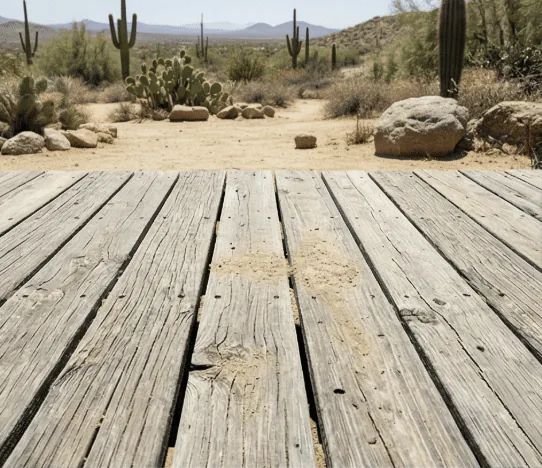
In hot, arid regions like the southwestern United States, decking materials need to withstand intense UV exposure and heat without warping, cracking, or becoming too hot to walk on comfortably.
Hardwood decking excels in desert environments like Arizona and Southern California, withstanding intense UV radiation without significant warping or color degradation, while composite materials struggle with intense heat.
Light-colored decking materials are preferable in hot climates as they absorb less heat. PVC and aluminum decking become uncomfortably hot to touch in direct sunlight, although manufacturers now offer heat-resistant formulations.
Consider these material recommendations for hot, dry climates:
- Tropical hardwoods like Ipe and Machiche
- Light-colored composite decking with heat-resistant technology
- Cedar with proper UV-protective sealants
Humid and Rainy Climates
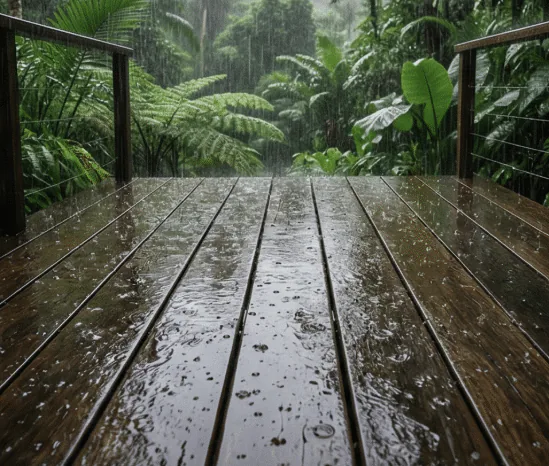
In regions with high humidity and frequent rainfall, moisture resistance becomes the primary concern. Materials need to withstand constant exposure to moisture without rotting, warping, or becoming breeding grounds for mold and mildew.
Tropical hardwoods Tropical hardwoods excel in humid environments due to their natural resistance to moisture absorption, making them excellent choices for humid environments like Florida or Louisiana.
Recommended materials for humid climates include:
- Tropical hardwoods (Ipe, Cumaru, Garapa)
- High-quality composite decking with protective capping
- PVC decking
- Aluminum decking (especially for areas subject to flooding)
Pressure-treated wood performs well in humid conditions but requires more vigilant maintenance to prevent moisture-related issues.
Cold and Snowy Climates
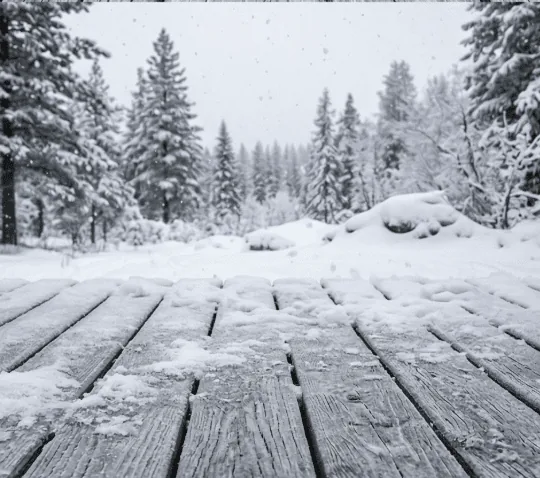
In northern regions that experience harsh winters, freeze-thaw cycles, and snow accumulation, decking materials must contend with unique challenges including moisture expansion, ice damage, and snow removal.
Composite decking holds up well in cold climates because it doesn’t expand and contract as much as wood with temperature fluctuations. However, certain composites become brittle and are more prone to damage in extreme cold.
For cold and snowy regions, consider:
- High-quality composite decking
- PVC with quality underlayment systems
- Pressure-treated wood (with proper sealing)
- Aluminum (for its snow-shedding properties)
Coastal Environments
Coastal areas present the most challenging conditions for decking materials, combining salt air, moisture, strong UV exposure, and strong winds. Salt can corrode fasteners and accelerate deterioration of many materials.
Coastal decking installations require materials specifically engineered to withstand the highly corrosive effects of salt-laden air and requires materials specifically designed to withstand these conditions.
Best choices for coastal environments include:
- Tropical hardwoods (especially Ipe)
- PVC decking
- Aluminum (with marine-grade finish)
- High-end composite with protective capping technology
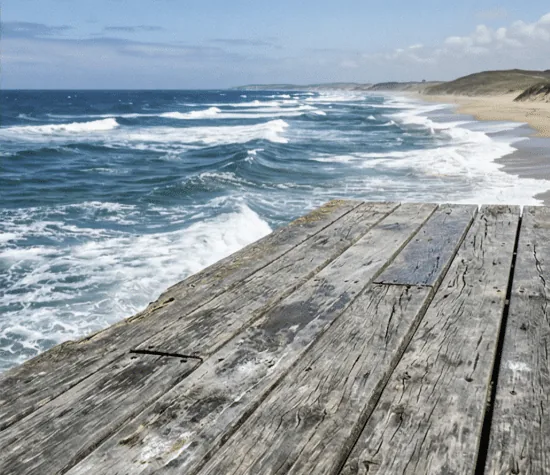
Coastal Consideration
When building a deck in coastal areas, always use stainless steel or other corrosion-resistant fasteners. Standard galvanized hardware will quickly corrode in salt air, compromising the structural integrity of your deck.
Cost Comparison of Decking Materials
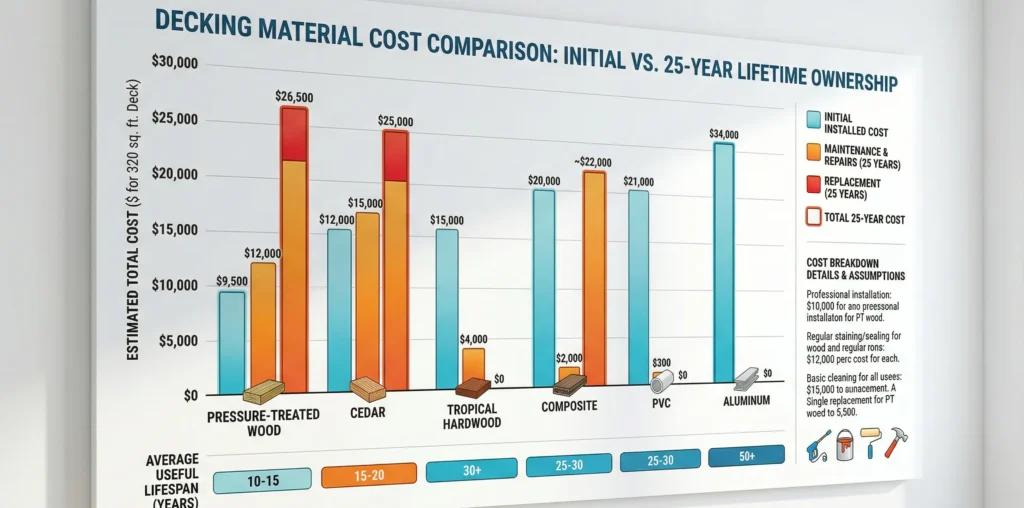
Decking material costs vary significantly, from economical pressure-treated pine ($3.65-$9.60/sq.ft) to premium aluminum ($15-$20+/sq.ft). Cedar and redwood fall midrange ($4-$10), while tropical hardwoods ($8.50-$16), composite ($5-$11), and PVC ($8.35-$12.65) represent higher-end options. Professional installation adds $8-$22/sq.ft. When calculating total ownership cost, factor in maintenance requirements, expected lifespan, warranty coverage, and impact on home resale value for accurate long-term value assessment.
The cost of decking materials varies significantly depending on the type, quality, and market conditions. While the initial purchase price is an important consideration, it’s equally important to factor in long-term maintenance costs and expected lifespan when determining the true value of your investment.
Evaluating decking materials solely on initial price often results in unexpected long-term maintenance and replacement expenses.
Initial Material Costs
Here’s a general comparison of material costs per square foot (materials only, not including installation):
- Pressure-treated pine: Pressure-treated pine decking costs between $3.65 and $9.60 per square foot for materials alone, making it our most economical option.
- Cedar/Redwood: $4 – $10 per square foot (premium grades up to $19)
- Tropical hardwoods (Ipe, Cumaru, etc.): $8.50 – $16 per square foot
- Composite decking: $5 – $11 per square foot
- PVC/vinyl decking: $8.35 – $12.65 per square foot
- Aluminum decking: $15 – $20+ per square foot
Softwoods, including pressure-treated pine, cedar, and redwood offer the most affordable replacement options for deck boards. However, the initial cost savings need to be weighed against long-term expenses.
Installation Costs
Labor costs for professional deck installation typically range from $8 to $22 per square foot, according to TimberTech. The complexity of the design, site accessibility, and regional labor rates all affect the final price. Materials like aluminum and certain composite systems require specialized skills or tools for installation, which increases labor costs.
According to Angi, Professional deck installation ensures code compliance and proper construction techniques, significantly reducing the likelihood of expensive structural issues in the future due to improper construction.
Long-Term Value
When calculating the total cost of ownership, consider these factors:
- Maintenance requirements and costs (staining, sealing, cleaning, repairs)
- Expected lifespan before replacement is needed
- Warranty coverage
- Potential impact on home resale value
Higher-end materials like composite, PVC, and tropical hardwoods typically offer better long-term value despite their higher initial cost. The reduced maintenance requirements and extended lifespan deliver significant savings over time.
Cost-Saving Tip
Consider a hybrid approach to save on costs: use premium decking materials for the visible surfaces (deck boards, railings) while using more economical pressure-treated lumber for the structural framing that isn’t visible.
Durability and Lifespan
Decking material lifespans vary dramatically: pressure-treated wood lasts 10-15 years, cedar/redwood 15-20 years, tropical hardwoods 25+ years, composite and PVC 25-30 years, and aluminum 30+ years. Resistance to moisture, insects, UV fading, and physical damage also differs by material. Manufactured products typically offer longer warranties (25-30 year structural, 15-25 year fade and stain) compared to natural wood. Climate conditions, installation quality, and maintenance practices significantly impact actual longevity.
The expected lifespan of your deck is one of the most important factors to consider when selecting a material. Different decking options offer varying levels of durability depending on their resistance to common threats like moisture, UV damage, insects, and daily wear and tear.
Our composite decking provides 25-30 years of service life, more than double the 10-15 year lifespan of pressure-treated softwood options, even with proper maintenance.
Average Lifespans by Material
- Pressure-treated wood: 10-15 years
- Cedar/Redwood: 15-20 years
- Tropical Hardwoods: 25+ years (select varieties last 50+ years with minimal care)
- Composite: 25-30 years
- PVC/Vinyl: 25-30 years
- Aluminum: 30+ years
These estimates assume proper installation and recommended maintenance. Actual lifespan is significantly affected by local climate conditions, usage patterns, and care practices.
Resistance to Common Problems
Different materials offer varying levels of resistance to common deck problems:
Moisture Damage/Rot: Aluminum and PVC offer the best protection against moisture, followed by high-quality capped composite. Tropical hardwoods have natural resistance, while pressure-treated pine and cedar are more susceptible despite their treatments.
Insect Damage: Aluminum, PVC, and composite are virtually immune to insect damage. Tropical hardwoods have excellent natural resistance, while pressure-treated lumber and cedar offer moderate protection.
UV Fading: Aluminum and premium PVC/composite products with UV inhibitors maintain their color best. Natural woods will weather to a silvery gray unless regularly treated with UV-protective finishes.
Scratching/Denting: Tropical hardwoods are the most resistant to physical damage, followed by composite materials. PVC scratches relatively easily, while aluminum is susceptible to dents from heavy impacts.
Warranty Considerations
Manufactured decking materials like composite and PVC typically come with longer warranties than natural wood products. Many premium brands offer:
- 25-30 year limited structural warranties
- 15-25 year fade and stain warranties
- Transferable warranty coverage for homebuyers
Warranty terms vary significantly between manufacturers; compare the fine print before making a final decision.
Maintenance Requirements
Maintenance demands vary significantly across decking materials. Pressure-treated wood requires annual cleaning, resealing every 1-2 years, and periodic staining, sanding, and repairs. Cedar needs similar but less frequent care. Tropical hardwoods need only occasional oil treatment to maintain color. Composite decking requires simple soap-and-water cleaning without staining or sealing. PVC and aluminum represent the most maintenance-free options, needing only occasional rinsing to remove debris.
The maintenance demands of your decking material will significantly impact both your long-term costs and the amount of time you’ll spend caring for your deck versus enjoying it. Understanding the maintenance requirements of different materials allows you to choose an option that fits your lifestyle and preferences.
Selecting low-maintenance decking materials eliminates countless hours of upkeep work while maintaining beautiful, functional outdoor living areas for years of enjoyment.
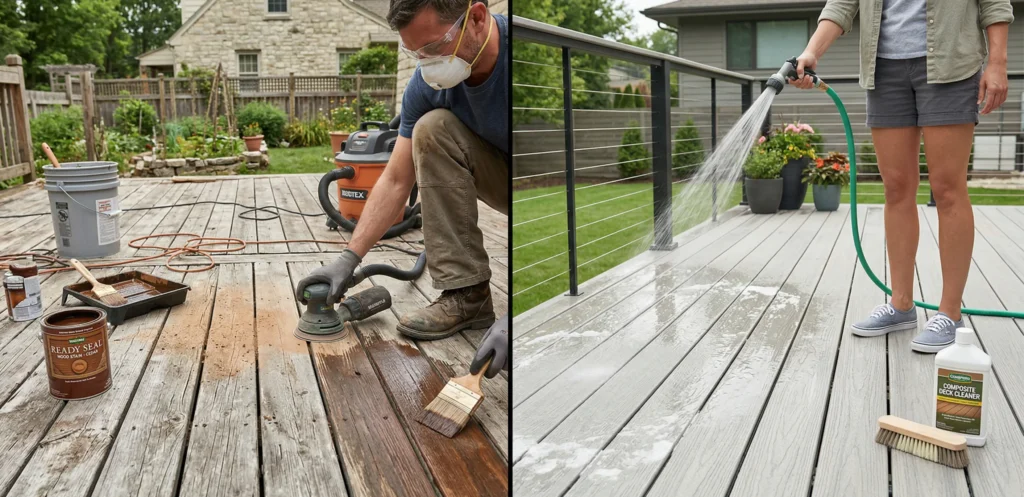
Wood Decking Maintenance
Pressure-Treated Wood: Requires the most intensive maintenance schedule among decking materials. Typical maintenance includes:
- Annual cleaning to remove dirt, debris, and mildew
- Reapplication of water-repellent sealer every 1-2 years
- Staining or painting every 2-3 years
- Periodic inspection for loose boards, popped nails, splitting, and rot
- Sanding to address splinters and rough spots
Cedar/Redwood: Requires similar maintenance to pressure-treated wood but is naturally more resistant to rot and insects. Without treatment, these woods will weather to a silvery gray. To maintain their natural color, they need:
- Cleaning once or twice per year
- Reapplication of UV-protective sealant every 1-3 years
- Periodic inspection for damage
Tropical Hardwoods: The lowest-maintenance wood option, these dense hardwoods weather naturally without compromising their structural integrity. For those who prefer to maintain their rich color:
- Annual cleaning
- Application of hardwood-specific oil finish every 1-3 years
Manufactured Decking Maintenance
Composite Decking: Requires significantly less maintenance than wood options:
- Periodic cleaning with soap and water or a composite deck cleaner
- No need for staining, sealing, or painting
- Occasional power washing (follow manufacturer recommendations for pressure settings)
- Prompt cleaning of spills to prevent staining (especially for non-capped composites)
PVC/Vinyl Decking: The most low-maintenance decking option:
- Periodic cleaning with soap and water
- No sealing, staining, or painting required
- Resistant to staining, though prompt cleaning of spills is still recommended
Aluminum Decking: Virtually maintenance-free:
- Occasional rinsing to remove dirt and debris
- No finishing or treatments needed
- Scratches in powder-coated finishes can be touched up if desired
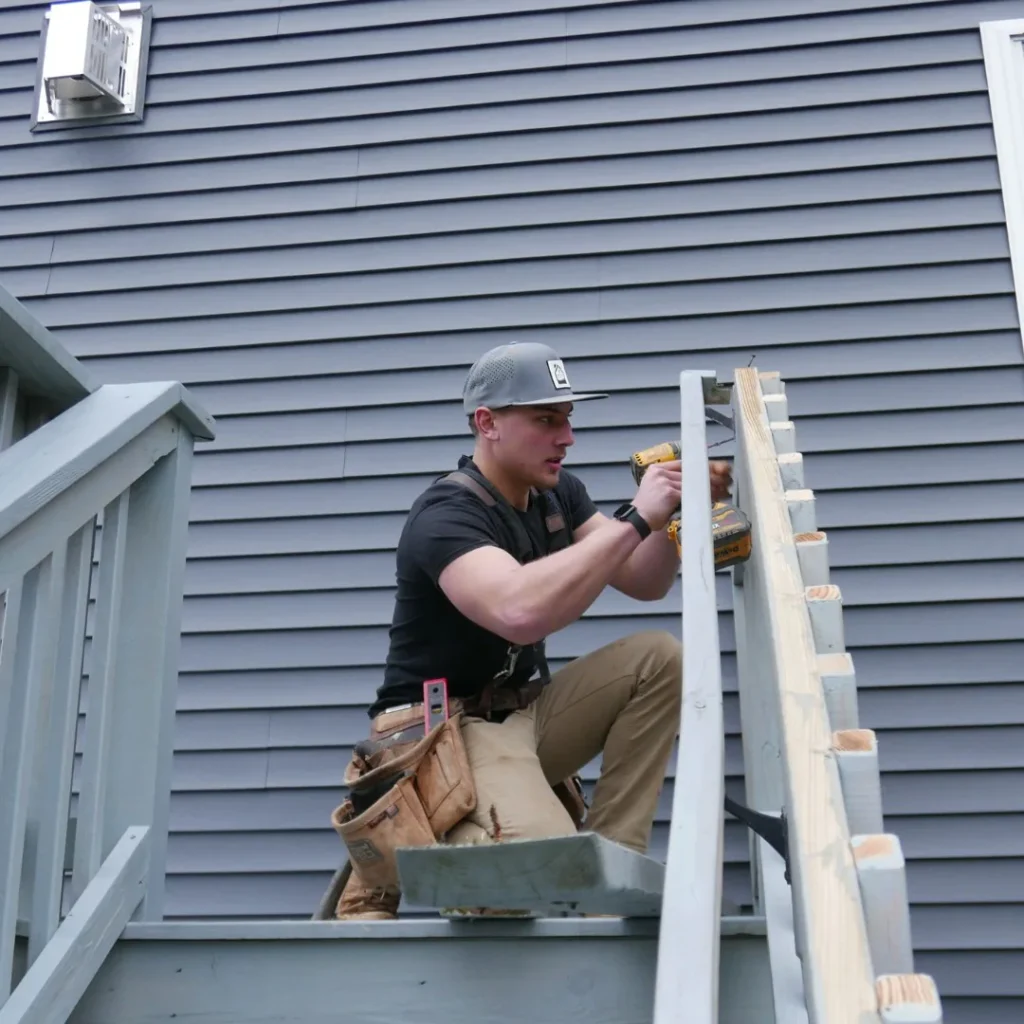
Maintenance Reality Check
According to deck maintenance experts, many homeowners underestimate the time and cost involved in properly maintaining a wood deck. Annual maintenance for a wood deck takes several days and costs hundreds of dollars in materials and tools.Environmental Considerations
Decking materials offer varying environmental credentials. FSC-certified woods from sustainable forests provide renewable options, though pressure-treated varieties contain chemicals requiring special disposal. Many composite products incorporate high percentages of recycled materials, helping mitigate climate impacts. While PVC production is petroleum-intensive, manufacturers increasingly incorporate recycled content. Aluminum, despite energy-intensive production, offers excellent sustainability through extreme durability, 100% recyclability, and high recycled content in many products.
The environmental impact of your decking choice extends from harvesting or manufacturing processes to the product’s recyclability at the end of its life. For environmentally conscious homeowners, sustainability factors are as important as performance and aesthetics.
Environmentally responsible decking choices substantially lower your home’s ecological impact while providing durable outdoor living spaces while still providing beauty and durability.
Wood Decking Environmental Impact
The environmental credentials of wood decking depend largely on forestry practices:
- Pressure-Treated Wood: While the wood itself is renewable, traditional pressure-treating chemicals have raised environmental concerns. Modern treatments are less toxic than older CCA (chromated copper arsenate) formulations but still introduce chemicals into the wood. At disposal, treated wood requires special handling and cannot be burned or composted.
- Cedar and Redwood: These domestic woods are sustainable choices when sourced from responsibly managed forests. Look for FSC (Forest Stewardship Council) certification to ensure sustainable harvesting practices. These woods require no chemical treatments to resist decay, making them a more natural option.
- Tropical Hardwoods: The environmental impact varies dramatically depending on harvesting practices. Illegally harvested tropical hardwoods contribute to deforestation and habitat destruction. When sourced from FSC-certified forests with sustainable harvesting methods, these incredibly durable woods are environmentally sound choices due to their exceptional longevity.
Manufactured Decking Environmental Impact
- Composite Decking: Many composite decking products contain a high percentage of recycled materials, including reclaimed wood fiber and recycled plastics (often from sources like plastic bags and bottles). According to a recent study by the American Chemical Society, Advanced composite decking technology helps mitigate climate change impacts compared to conventional building materials compared to traditional building materials. The manufacturing process requires energy, yet the long lifespan of the products and their low maintenance requirements offset this impact.
- PVC/Vinyl Decking: Generally considered less eco-friendly than composites, as PVC is derived from petroleum and requires significant energy to manufacture. Manufacturers have improved their environmental profile by incorporating recycled content and making their products recyclable at the end of their lifespan.
- Aluminum Decking: While energy-intensive to produce initially, aluminum offers excellent environmental credentials due to its extreme durability, 100% recyclability, and the high recycled content in many aluminum decking products. The complete recyclability of aluminum decking establishes it as among the most environmentally sustainable decking solutions over its complete lifecycle despite its higher initial carbon footprint.
Sustainability Best Practices
To minimize the environmental impact of your deck, consider these practices:
- Choose materials with high recycled content or sustainable harvesting certification
- Opt for durable materials that won’t need frequent replacement
- Use environmentally friendly cleaning products for maintenance
- Consider the entire lifecycle of the product, including end-of-life disposal or recycling options
- Work with contractors who practice responsible waste management during installation
Free Design Resource
The Ultimate Guide to Custom Deck Design & Construction
Want to dive deeper before scheduling a consultation? Download our comprehensive whitepaper to explore material comparisons, safety codes, and expert layout tips.
- Material Comparison & Lifespans
- Safety Guidelines & Building Codes
- Budget Optimization Strategies
Frequently Asked Questions
Wood Decking Environmental Impact
Aluminum decking offers the greatest durability, followed closely by high-quality tropical hardwoods like Ipe. Both materials last 30+ years with minimal maintenance. PVC and composite materials also offer excellent durability in the 25-30 year range. The longevity of any decking material depends significantly on local climate conditions, proper installation, and maintenance practices.
What is the most cost-effective decking material?
While pressure-treated wood has the lowest initial cost ($3.65-$9.60 per square foot), higher-end materials like composite and tropical hardwoods prove more cost-effective over their lifetime due to reduced maintenance costs and longer lifespan. When calculating cost-effectiveness, consider both the upfront expense and long-term maintenance requirements, including your time investment.
How often should I clean and maintain my deck?
Maintenance frequency depends on your decking material:
- Wood decks: Clean annually and reapply protective treatments every 1-3 years
- Composite decks: Clean 1-2 times per year with soap and water
- PVC decks: Occasional cleaning as needed, typically 1-2 times per year
- Aluminum decks: Simple rinsing to remove debris when necessary
Regular inspections (at least annually) are recommended for all deck types to identify and address any developing issues before they become serious problems.
What decking material is best for extreme weather conditions?
For extreme weather conditions, tropical hardwoods like Ipe and Cumaru offer exceptional resilience against heat, UV exposure, moisture, and freeze-thaw cycles. Aluminum is another excellent choice, particularly in regions with heavy snowfall or coastal environments with salt exposure. High-quality capped composite and PVC products designed specifically for climate resistance perform well in challenging environments.
Can I install decking materials myself, or should I hire a professional?
While DIY deck installation is an option for those with advanced carpentry skills, professional installation ensures proper structural support, code compliance, and optimal performance of the decking materials. Certain materials like aluminum and some composite systems have specialized installation requirements that are challenging for DIYers. At minimum, consider professional design and structural installation, even if you plan to install the decking boards yourself.
What decking material stays the coolest in direct sunlight?
Natural wood stays cooler underfoot than manufactured materials. Light-colored cedar and other softwoods typically remain the coolest in direct sunlight. Dark-colored composite decking surfaces reach substantially higher temperatures than lighter-colored alternatives when exposed to direct sunlight. Many manufacturers now offer heat-resistant technologies in their composite and PVC products to address this concern.
How do I prevent mold and mildew on my deck?
To prevent mold and mildew:
- Ensure proper drainage and ventilation around and under the deck
- Keep the deck surface clean of organic debris like leaves and pollen
- Trim nearby vegetation to increase sunlight and airflow
- Apply appropriate protective treatments to wood decking
- Clean spills promptly to prevent nutrient sources for mold growth
- Use recommended cleaners designed for your specific decking material
Composite and PVC decking with anti-microbial protection offer additional resistance against mold an