Key Takeaways
Perfect for Uneven Terrain
Multi-level deck designs work with your land’s natural contours instead of fighting against them, reducing the need for extensive grading
Defined Activity Zones
Create distinct spaces for cooking, dining, relaxation, and entertainment across different levels
Enhanced Visual Appeal
The varying heights and transitions between levels add architectural interest and curb appeal to your home
Maximized Space Utilization
Make use of your entire yard without consuming all of your green space
Increased Property Value
Well-designed multi-level deck designs can significantly boost your home’s resale value
Multi-Level Deck Basics
The evolution of outdoor living has transformed decks from simple flat surfaces into intricate, elevated designs that offer multiple levels of enjoyment and utility. For anyone dealing with challenging landscape features like slopes or uneven terrain, a multi-level deck design provides the perfect solution. This comprehensive guide explores the benefits, design considerations, and creative ideas for multi-level deck designs that will create a stunning, functional extension of your home.
Traditional single-level decks have served families well for decades, but multi-level designs offer a host of advantages that make them increasingly popular choices for homeowners. These tiered outdoor spaces accommodate various activities while working harmoniously with your property’s natural features. Multi-level deck designs give you the flexibility to create purpose-built zones that maintain privacy without sacrificing connection between spaces.
Explore Our Complete Deck Building Guide
Looking for comprehensive information about all aspects of deck construction? Our complete guide covers everything from planning to finishing touches.
Custom Deck Design & Construction: Transform Your Outdoor Living Space
What Are Multi-Level Deck Designs and Why Choose Them?
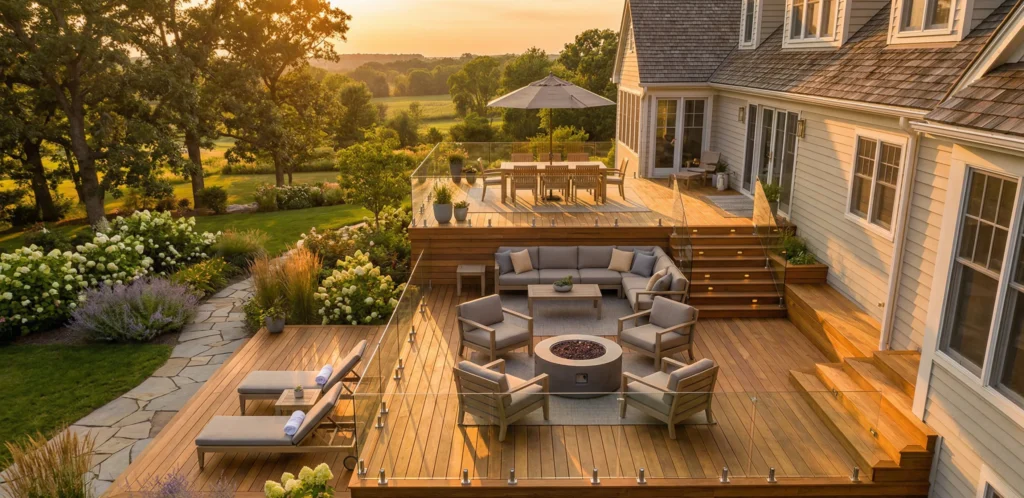
Multi-level deck designs feature interconnected tiers at different heights connected by stairs or platforms, creating several distinct outdoor spaces. Unlike traditional single-level decks, these designs deliver versatility and are tailored to fit various landscape challenges and lifestyle needs. The multiple levels break up large spaces into more intimate zones without using visual barriers that block views or light.
Before settling on a standard deck, it’s worth exploring the unique benefits of multi-level designs. Multi-level decks significantly expand your usable outdoor living area for family activities. The beauty of multi-level deck designs lies in their ability to create purpose-built zones for different activities while maximizing your outdoor space.
The Perfect Solution for Challenging Landscapes
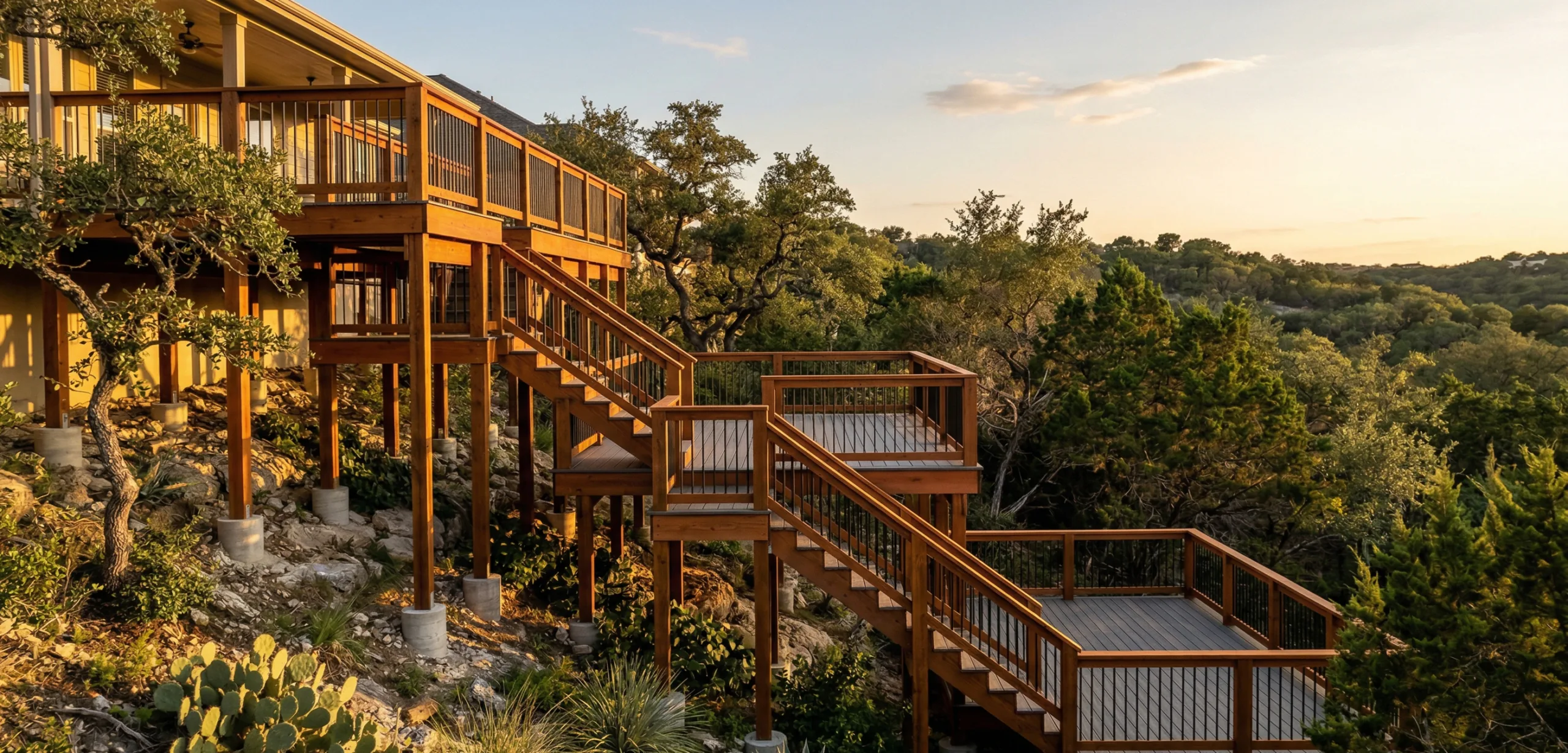
One of the most compelling reasons to choose a multi-level deck design is its ability to work with difficult terrain. Rather than fighting against your land’s natural contours, these designs embrace them. A tiered approach transforms steeply sloped or rocky yards that otherwise require expensive excavation and grading into functional outdoor living spaces.
Multi-level deck designs blend with your natural landscape, particularly when using adjustable deck supports. Instead of flattening the land, these structures step down naturally, preserving the character of your property while making previously unusable areas accessible and enjoyable. Multi-level decks maximize uneven terrain by transforming challenging landscapes into functional, visually appealing outdoor spaces.
Engineering Insight
When building on slopes greater than 20 degrees, consider using adjustable pedestal systems specifically designed for multi-level decks rather than traditional post structures.Key Benefits of Multi-Level Deck Designs
The advantages of multi-level deck designs extend far beyond their ability to handle challenging terrain. Let’s explore the key benefits that make these structures increasingly popular choices for homeowners looking to enhance their outdoor living experience.
Creating Distinct Functional Zones
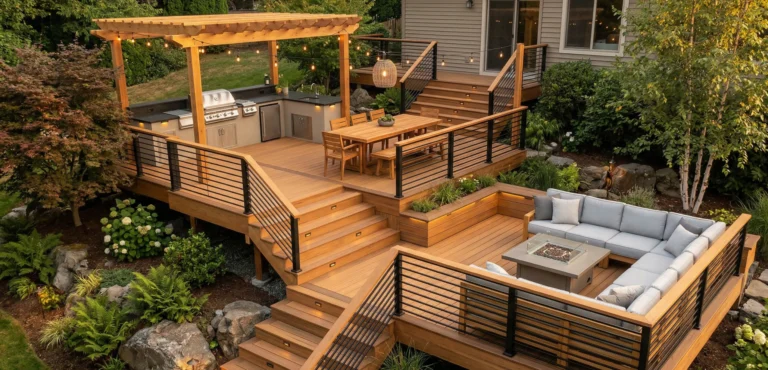
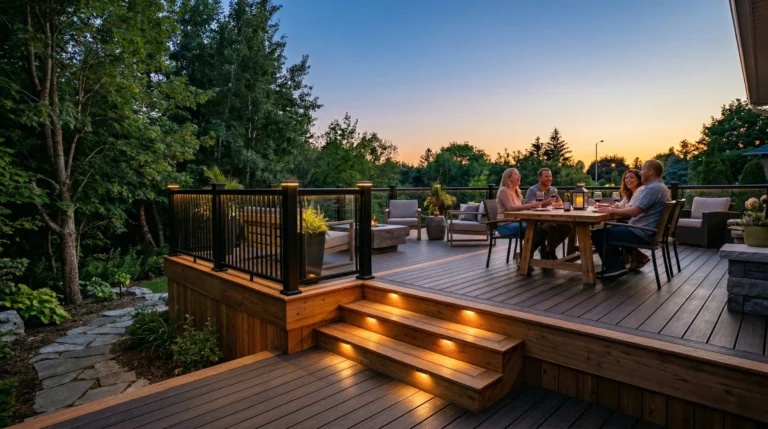
The most appealing aspect of multi-level deck designs is their ability to create separate spaces for different activities. Rather than crowding everything onto one platform, this design enables you to designate specific areas for dining, cooking, lounging, or entertainment. Different deck levels can serve distinct purposes, with dining areas on one tier and lounging spaces on another.
This zoning approach mimics interior design principles, where room divisions create natural flow and purpose. The design allows for creating an upper level for cooking and outdoor dining, a middle level for relaxation and conversation, and a lower level that transitions to a garden or pool area. The physical separation between areas creates natural boundaries without walls, allowing for both connection and distinction between spaces.
Enhanced Visual Interest and Curb Appeal
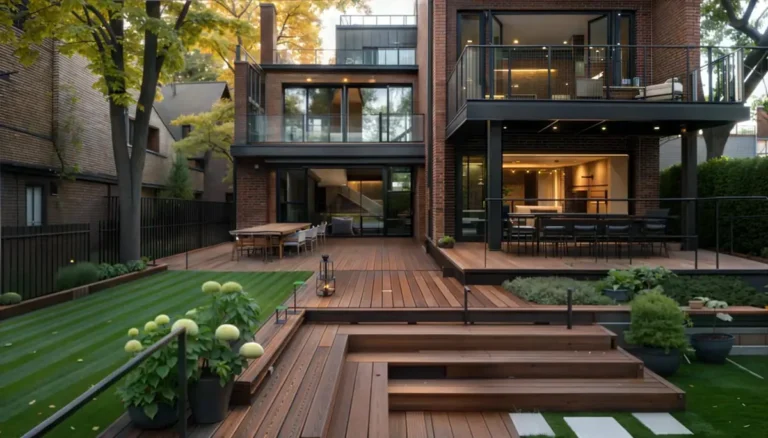
Beyond practical advantages, multi-level deck designs simply look more impressive. The varying heights create visual interest and architectural detail that flat decks can’t match. The combination of features like stairs, railings, built-in planters, and level changes adds depth and dimension to your home’s exterior.
These aesthetic advantages don’t just improve your daily enjoyment—they can significantly boost your property’s curb appeal and resale value. A thoughtfully designed multi-level deck becomes a distinctive feature that sets your home apart in the real estate market.
Maximizing Outdoor Space Without Sacrificing Yard Area
Multi-level deck designs make efficient use of available space, especially in situations where yard area is limited or the landscape presents challenges. Building up and out with purpose-specific zones creates more usable outdoor living area without consuming your entire garden or play space.
Multi-level decks provide more spacious movement areas and create improved flow between different outdoor zones, making them ideal for properties where maximizing functionality is a priority without sacrificing green space. This approach lets you maintain garden areas while still having ample room for relaxation and entertainment.
Space Planning Guide
Allow at least 16×16 feet for dining areas, 12×12 feet for conversation areas, and 8×8 feet for transitional spaces between levels to ensure comfortable movement.
Design Considerations for Multi-Level Deck Designs
Creating a successful multi-level deck design requires thoughtful planning and consideration of several key factors. Let’s explore the essential elements that should guide your design process.
Understanding Your Landscape and Working With It
Before diving into design specifics, take time to understand your property’s unique features. Assess the terrain, noting any slopes, elevation changes, or obstacles. Consider how water flows across your property, where the sun hits throughout the day, and how wind patterns might affect different areas.
According to Dunn Lumber, building on sloped terrain impacts numerous variables including permitting requirements, design considerations, and additional support structures needed for construction. For properties with significant slopes or soil stability concerns, consulting with a geotechnical engineer is required to determine the best approach for your specific site conditions.
Working with your landscape rather than against it not only reduces construction costs but also results in a more natural-looking and harmonious outdoor space. Let the land guide your design decisions, using its contours to inform level changes and transitions.
Safety Considerations and Building Codes
Safety is a top priority when designing a multi-level deck. These structures inherently involve elevation changes, which can present hazards if not properly addressed. Key safety considerations include:
- Secure railings that meet local building codes, especially on elevated sections
- Proper lighting for steps, pathways, and level changes to prevent trips and falls
- Non-slip decking materials, particularly in areas that may get wet
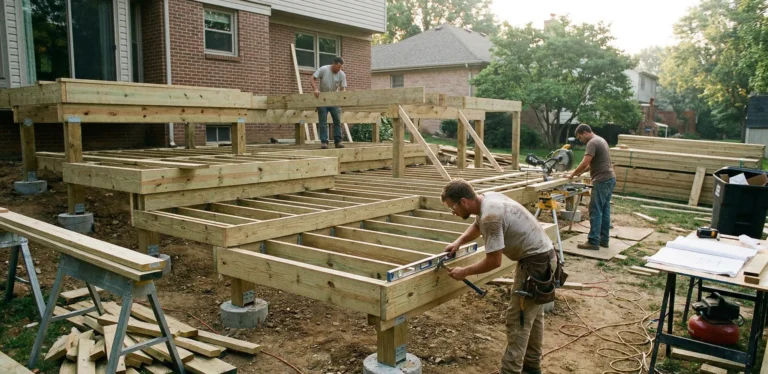
- Sturdy foundations and support structures engineered for your specific terrain
Hinkle Hardscapes emphasizes that railings and lighting are critical safety features for multi-level decks as they guide movement and prevent accidents, especially in low-light conditions. Always check local building codes and permit requirements before beginning construction, as these will vary by location and may have specific stipulations for multi-level structures.
Creating Smooth Transitions Between Levels
The connections between different levels are critical elements in your deck design. Well-planned transitions not only ensure safety but also contribute to the overall flow and usability of the space. Use wide, shallow steps rather than steeper staircases where possible, as these create more gentle transitions and also serve as casual seating areas.
Some designers incorporate landings between longer staircases, which provide visual breaks and make navigation easier. For properties with significant elevation changes, switchback stairs or curved transitions add visual interest while making the climb less strenuous.
Material Selection for Durability and Aesthetics
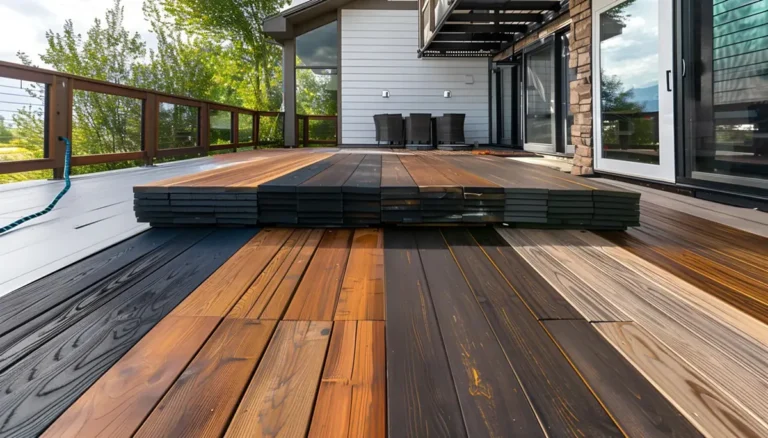
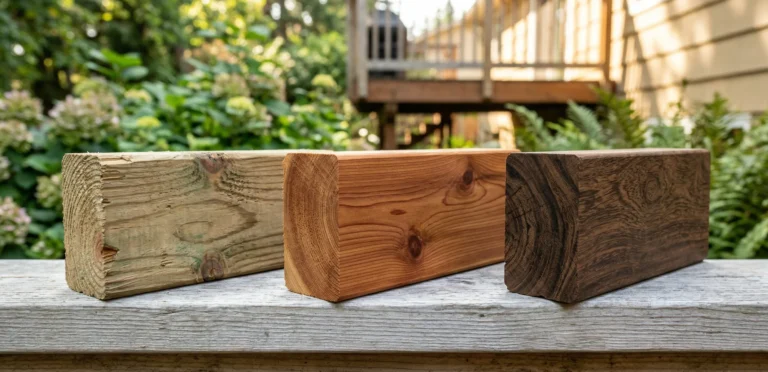
The materials you choose for your multi-level deck will significantly impact both its appearance and longevity. Traditional options like pressure-treated lumber, cedar, and redwood remain popular for their natural beauty, while composite decking materials offer greater durability with minimal maintenance.
Premium composite decking materials such as Deckorator, Timbertech, and Trex offer exceptional durability with minimal maintenance requirements compared to traditional wood decks. These materials resist fading, staining, and mold, making them excellent choices for long-term performance.
Beyond the decking itself, consider materials for railings, stairs, and structural components. Mixing materials can create visual interest—think wooden decking with metal railings or stone accents to add texture and contrast. The key is selecting options that complement your home’s architecture while providing the durability needed for your climate and intended use.
Multi-level Deck Design
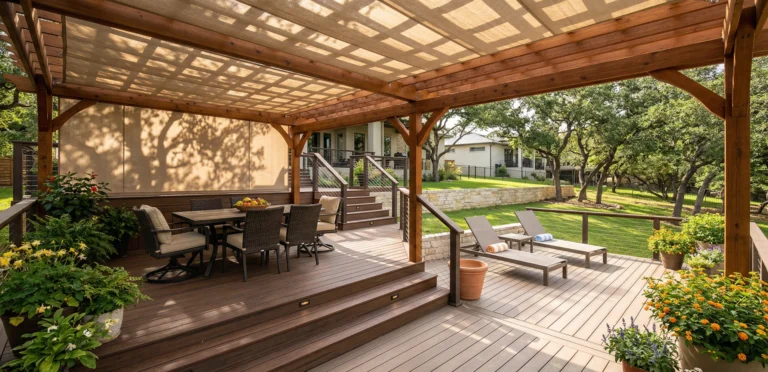
Each level of a multi-level deck design is tailored to specific activities, making your backyard more versatile and inviting while creating distinct zones for cooking, dining, relaxation, and entertainment.
Building Code Alert
Most municipalities require railings on any deck surface more than 30 inches above grade, with specific height requirements that vary by location.Curb Appeal
Well-designed multi-level deck designs significantly boost your property’s curb appeal and resale value by creating visual interest with varying heights, stairs, railings, and built-in features.
Creative Design Ideas for Multi-Level Deck Designs
Once you have considered the practical aspects of your multi-level deck design, it is time to explore design ideas that elevate your outdoor space from functional to extraordinary. Here are some creative approaches to inspire your project.
Incorporating Built-In Features
Built-in elements significantly enhance both the functionality and visual appeal of your multi-level deck design. Consider incorporating features like:
- Built-in seating with hidden storage underneath
- Planters and garden boxes integrated into level changes
- Outdoor kitchen or bar areas with countertops and appliances
- Fire pits or fireplaces as focal points for gathering spaces
- Water features that create ambient sound and visual interest
These permanent features not only add convenience but also create a more cohesive, thoughtfully designed space that feels like a natural extension of your home rather than an afterthought.
Shade Solutions and Privacy Features
Creating comfortable, usable outdoor spaces requires addressing practical concerns like sun exposure and privacy. A multi-level deck design offers unique opportunities to incorporate shade and privacy solutions across different areas.
Multi-level decks allow for creating dedicated shaded areas on one level while maintaining open sunbathing spaces on another. For example, add a pergola over a dining area while leaving a lounging space open to sunshine. You can also strategically place privacy screens, trellises, or tall planters to shield certain areas from a neighbor’s views without closing off the entire deck.
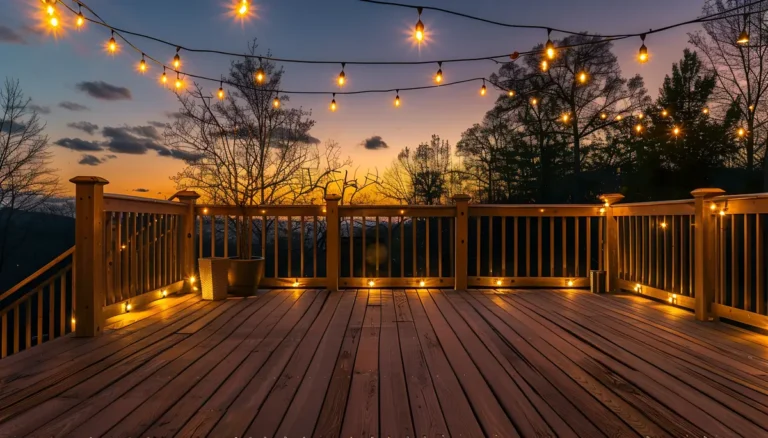
Strategic Lighting for Safety and Ambiance
Thoughtful lighting design transforms your multi-level deck from a daytime-only space to an outdoor retreat for day and evening use while ensuring safety around level changes and stairs. Consider layering different types of lighting, including:
- Recessed lights built into stair risers and deck boards for navigation
- Post cap lights or railing lights to define boundaries
- String lights or overhead pendant fixtures for ambient lighting
- Spotlights to highlight architectural features or landscaping
- Fire features that provide both light and warmth
Strategic lighting dramatically enhances deck aesthetics while extending usability well into the evening hours. Today’s energy-efficient LED options and smart controls enable the creation of programmable lighting scenes for different occasions and times of day.
Design Tip
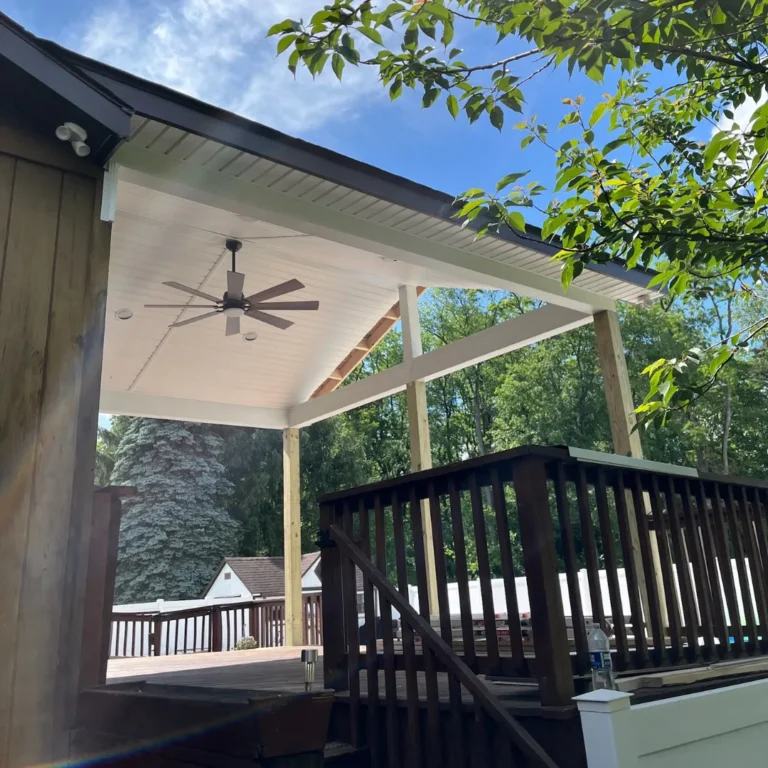
Use the height differences between levels to create natural privacy barriers, with upper levels shielded by pergolas and lower levels protected by the decking above.
Planning and Building Your Multi-Level Deck Design
Moving from inspiration to implementation requires careful planning and execution. Here’s how to approach the process of bringing your multi-level deck design vision to life.
Budget Considerations and Cost Factors
Multi-level deck designs cost more than their single-level counterparts due to increased complexity, materials, and labor. Pressure-treated decking costs $3-$6 per square foot, cedar decking ranges from $7-$15, and composite decking materials run between $5 and $13 per square foot. When factoring in professional installation, these costs rise significantly.
Key factors that influence your budget include:
- Total square footage across all levels
- Complexity of the terrain and required structural supports
- Material choices for decking, railings, and other features
- Built-in elements like seating, planters, or outdoor kitchens
- Lighting systems and electrical work
To manage costs effectively, consider phasing construction over time, focusing first on the core structure and adding enhanced features later. Alternatively, splurge on premium materials for high-visibility areas while using more economical options in less prominent sections.
DIY vs. Professional Installation
While simple deck projects are suitable for some DIY enthusiasts, multi-level structures demand professional expertise, especially when dealing with challenging terrain or complex designs. The structural requirements, code compliance, and engineering challenges associated with tiered decks benefit from professional knowledge.
If you’re considering the DIY route, assess your skills honestly and research thoroughly before proceeding. Safety must be the primary consideration when planning any deck project, just as with all home improvements. For many homeowners, the best approach is a hybrid one—hiring professionals for the structural work while taking on finishing touches like staining or adding decorative elements themselves.
Maintenance Considerations for Long-Term Enjoyment
To ensure your multi-level deck design remains beautiful and functional for years to come, plan for regular maintenance from the outset. Your maintenance routine will vary depending on the materials you select, but some general considerations include:
- Regular cleaning to remove debris, prevent mold growth, and preserve appearance
- Inspection of structural elements, especially after severe weather events
- Checking and tightening fasteners and hardware
- Refinishing or resealing wood surfaces according to manufacturer recommendations
- Clearing drainage paths to prevent water accumulation
Composite materials generally require less maintenance than natural wood, but no decking option is entirely maintenance-free. Regularly relocating planters prevents discoloration and moisture damage to both upper and lower deck boards. Cleaning up spills promptly will prevent stains on wooden decking.
Budget Breakdown
For multi-level decks, allocate 60% of your budget to materials, 30% to labor costs, and 10% for permits and unexpected expenses to ensure you have adequate coverage for your project.Real-World Multi-Level Deck Design Inspiration
Looking at successful multi-level deck design projects provides valuable inspiration for your own design. Here are some popular approaches that demonstrate the versatility and potential of tiered outdoor spaces.
Stepped Design for Sloped Properties
For properties with significant grade changes, a stepped deck design creates natural transitions that follow the terrain. These designs feature a series of platforms that step down gradually, connected by wide stairs or small landings. The result is an organic-feeling outdoor space that celebrates rather than conceals the property’s natural topography.
A staggered multi-level approach works particularly well for hillside properties with panoramic views, as each level can be positioned to maximize sight lines.
Entertainment-Focused Multi-Zone Designs
For homeowners who love to entertain, multi-level deck designs are specifically tailored to accommodate different aspects of hosting. A common arrangement includes an upper level connected to the kitchen for food preparation and dining, a middle level for conversation and lounging, and a lower level that features a fire pit, hot tub, or transition to a pool area.
This zoned approach creates natural flow for gatherings while preventing any one area from feeling overcrowded. This zoned approach allows guests to naturally migrate between areas based on their preferences and the activities taking place.
Indoor-Outdoor Connection Designs
Another popular approach focuses on creating seamless transitions between indoor and outdoor living spaces. These designs often feature an upper deck level that aligns with the home’s interior floor height, creating a natural extension of living space. The layout includes multiple access points from different rooms of the house, each connecting to purpose-specific outdoor zones.
Creating direct access from each back exterior door to different deck levels enhances indoor-outdoor living accessibility. This approach effectively turns your deck into additional rooms that happen to be outdoors, with the benefit of fresh air and natural surroundings.
Transition Tip
Match your deck flooring direction to your interior flooring to create visual continuity between indoor and outdoor spaces when using French or sliding doors.
The Environmental Impact of Multi-Level Deck Designs
As environmental awareness grows, many homeowners are considering the ecological implications of their outdoor living choices. Multi-level deck designs can be implemented with sustainability in mind, incorporating eco-friendly features and materials.
Sustainable Material Options
Today’s market offers numerous environmentally responsible decking options, including:
- Reclaimed or responsibly harvested wood from certified sustainable forests
- Composite decking made from recycled plastics and wood fibers
- Modified wood products that improve durability without toxic chemicals
- Locally sourced stone and natural materials that reduce transportation impacts
When selecting materials, consider not just their origin but also their expected lifespan and end-of-life disposal options. Longer-lasting materials have higher initial environmental impacts but prove more sustainable over time by avoiding frequent replacements.
Working With the Natural Environment
Multi-level deck designs offer unique opportunities to work harmoniously with the natural environment. By following the land’s contours rather than reshaping them, these designs minimize soil disturbance and preserve existing drainage patterns. This approach requires less heavy machinery and excavation, reducing the carbon footprint of construction.
Incorporate elements that support local ecosystems, such as:
- Native plant species in built-in planters or surrounding landscaping
- Permeable surfaces that allow rainwater to reach soil beneath
- Rainwater collection systems integrated into the deck design
- Spaces beneath elevated sections that can serve as habitat for small wildlife
A thoughtfully designed multi-level deck enhances the ecological value of your property while providing the outdoor living space you desire.
Eco-Friendly Design
Incorporate permeable surfaces between deck boards and in surrounding landscaping to manage rainwater runoff naturally and reduce erosion on sloped properties.
Free Design Resource
The Ultimate Guide to Custom Deck Design & Construction
Want to dive deeper before scheduling a consultation? Download our comprehensive whitepaper to explore material comparisons, safety codes, and expert layout tips.
- Material Comparison & Lifespans
- Safety Guidelines & Building Codes
- Budget Optimization Strategies
Frequently Asked Questions About Multi-Level Deck Designs
Are multi-level deck designs more expensive than single-level decks?
Yes, multi-level deck designs cost more than single-level designs due to increased complexity, additional materials, and more intricate construction requirements. However, they are more cost-effective than alternative solutions for challenging terrains, as they reduce the need for extensive grading and excavation. The price difference varies widely depending on design complexity, materials chosen, and site conditions.
Do multi-level deck designs require special permits?
Most deck construction requires permits, and multi-level designs face additional scrutiny from local building departments due to their complexity. Requirements vary significantly between jurisdictions, so checking with your local building authority before beginning any work is essential. Many municipalities have specific codes addressing deck height, railing requirements, stair specifications, and structural support for multi-level structures.
How difficult is it to maintain a multi-level deck?
Maintenance requirements depend primarily on your choice of materials rather than the multi-level design itself. Composite and PVC decking options require minimal maintenance beyond regular cleaning, while wood decks need periodic sealing, staining, or painting. The additional features common to multi-level decks, such as stairs and railings, create more areas that require inspection and maintenance, but this is manageable with a regular care routine.
Can a multi-level deck design be added to any home?
While multi-level deck designs are versatile and work with many home styles and landscapes, not every property is ideal for this design. Factors like lot size, soil conditions, existing structures, and property setback requirements limit your options. Consult with a professional deck designer or contractor who will evaluate your specific situation and recommend appropriate solutions. When lot size or soil conditions are restrictive, a hybrid approach combining deck areas with patio spaces is more suitable.
How do I ensure proper drainage on a multi-level deck?
Proper drainage is crucial for the longevity of any deck, but particularly important for multi-level designs where water accumulates between levels. Key strategies include slight slopes (about 1/8 inch per foot) away from the house, gaps between deck boards, and consideration of water flow patterns across the entire structure. For upper levels that sit above lower sections, specialized drainage systems or water-diverting membranes are installed to keep the space below dry and usable.